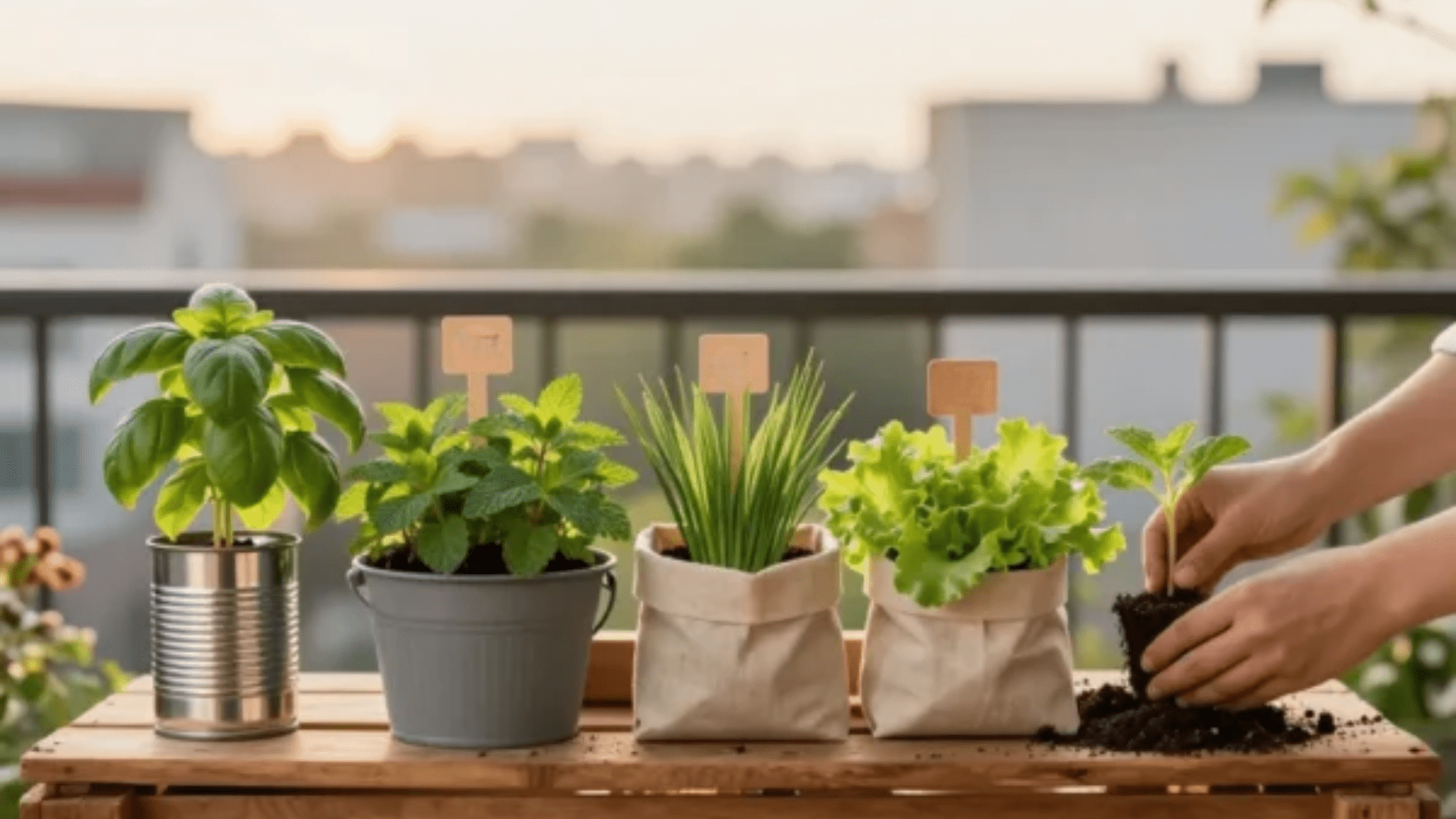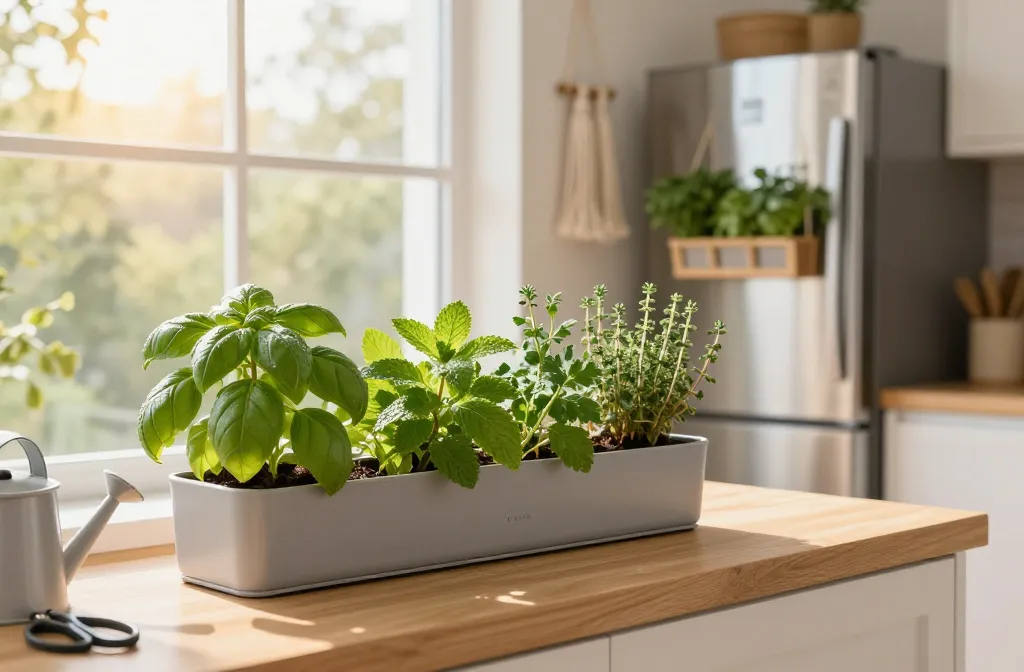

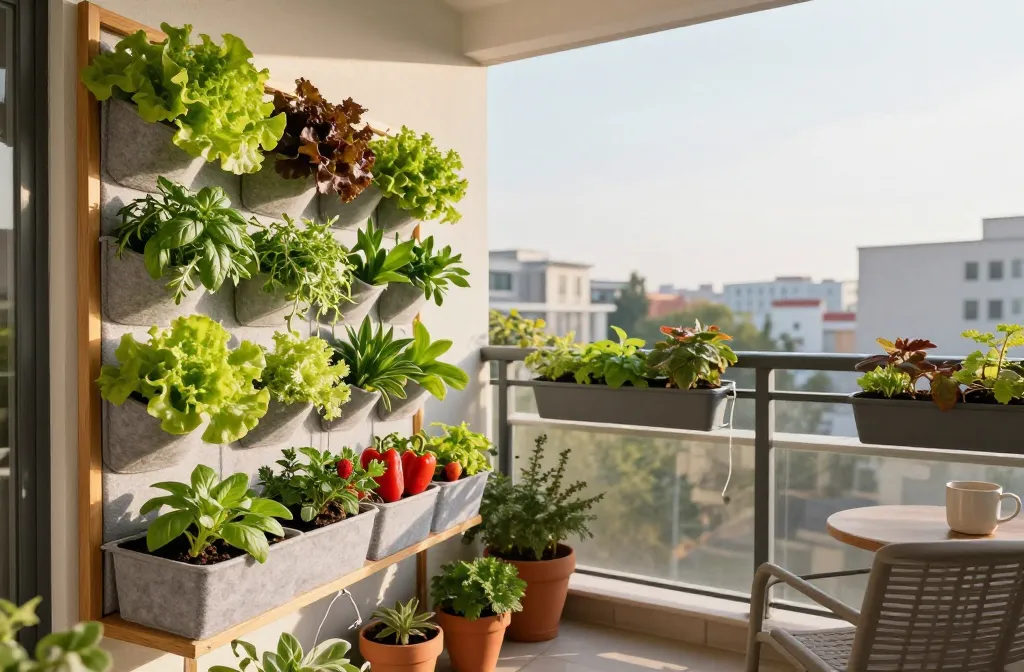

Your balcony can crank out more veggies than you think. You don’t need a backyard, a shed, or a tractor—just smart setups and plants that hustle. These ideas turn cramped rails and corners into a mini farm you’ll brag about. Ready to harvest without leaving your slippers?
Let’s stack, hang, and squeeze every inch so you can snip salad greens before your coffee cools. You’ll get practical tips, simple materials, and zero fluff—just juicy tomatoes and proud-plant-parent vibes.
1. Vertical Veggie Wall That Doubles As Privacy
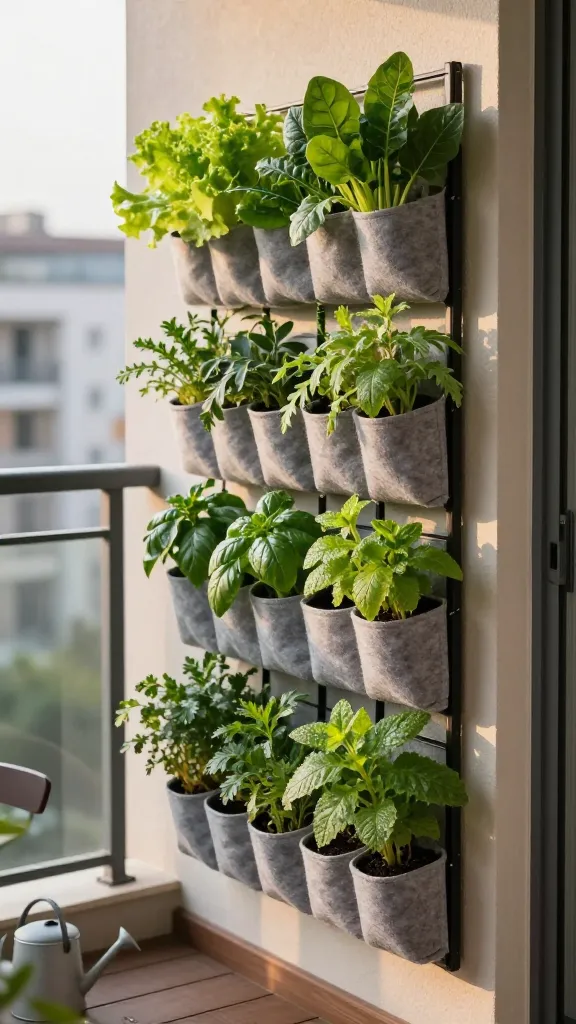
When floor space disappears, go up. A vertical garden turns a bland railing or wall into a lush curtain of food that also blocks nosy neighbors—win-win. You’ll use stackable pockets, shelves, or a trellis to grow greens, herbs, and compact veggies in layers.
Great For:
- Leafy greens like lettuce, spinach, arugula
- Herbs such as basil, mint, parsley, cilantro
- Compact peppers and strawberries in the middle rows
Tips:
- Put thirsty plants lower so runoff from upper pockets feeds them.
- Choose breathable felt pockets or wall planters with drainage trays.
- Add a simple drip line with a timer to dodge daily watering guilt.
Use this when your balcony needs both greenery and privacy—and you want salad on tap.
2. Rail Planters For Endless Herbs And Snack Peppers
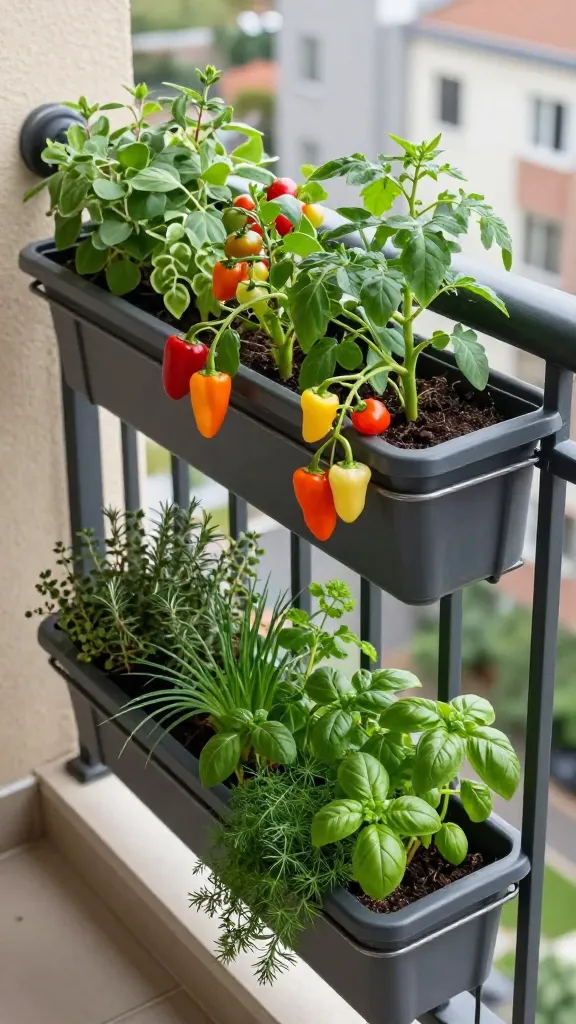
Balcony rails are prime real estate—use them. Over-the-rail planters keep your floor clear and put herbs within arm’s reach of your kitchen door. They grab sun, resist wind better than tall pots, and look cute while doing it.
What Thrives Here:
- Trailing thyme, oregano, and rosemary on the sunny edge
- Compact basil, chives, dill, and parsley in the center
- Mini peppers or dwarf tomatoes if your railing gets 6–8 hours of sun
Pro Moves:
- Pick planters with adjustable brackets so they sit level and secure.
- Mix potting soil + perlite for drainage; rail planters can get soggy.
- Use slow-release fertilizer to keep herbs flavorful, not leggy.
Ideal if you want easy clipping and fast growth without crowding your walking space.
3. Stackable Tower Planters For Strawberries And Leafy Greens
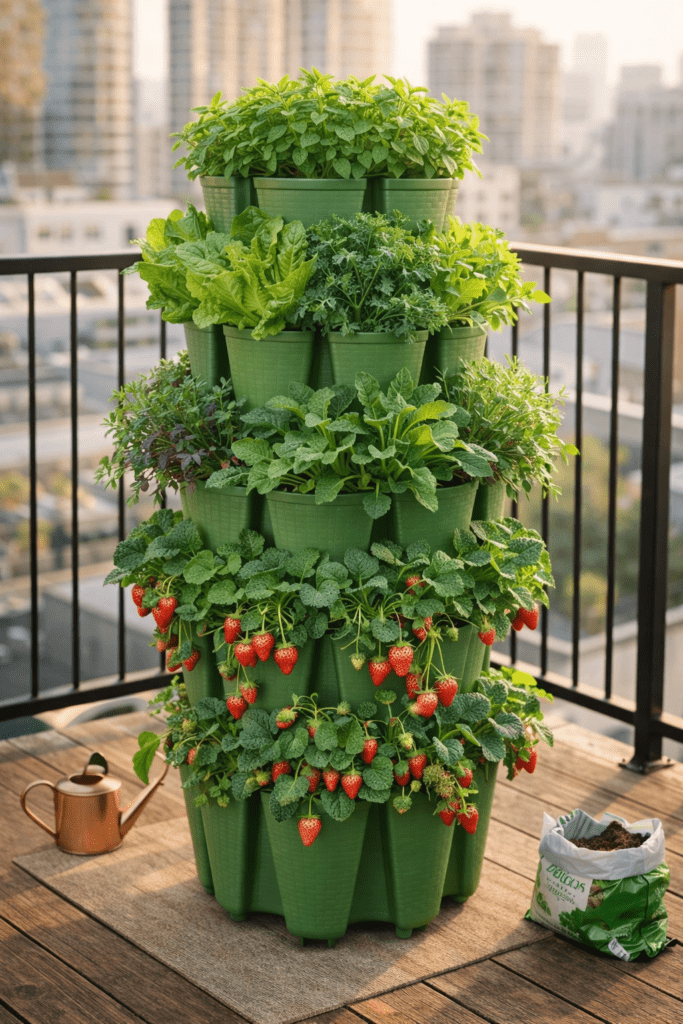
Tower planters are the overachievers of small-space growing. They stack up like Lego and let you grow 20–50 plants in a footprint smaller than your welcome mat. Bonus: they look insanely lush once everything fills in.
Best Uses:
- Strawberries in every pocket for nonstop snacking
- Cut-and-come-again greens like mizuna, baby kale, and romaine
- Mint and other spreaders—contained in their own tier so they don’t bully neighbors
Setup Tips:
- Put heavier feeders near the top where nutrients hit first when watering.
- Rotate the tower weekly for even sun and growth.
- Drop a central watering spike or drip ring to reach all layers.
Use a tower when you want maximum harvest with minimal square footage. Seriously, it’s a salad factory.
4. Self-Watering Containers That Forgive Busy Schedules
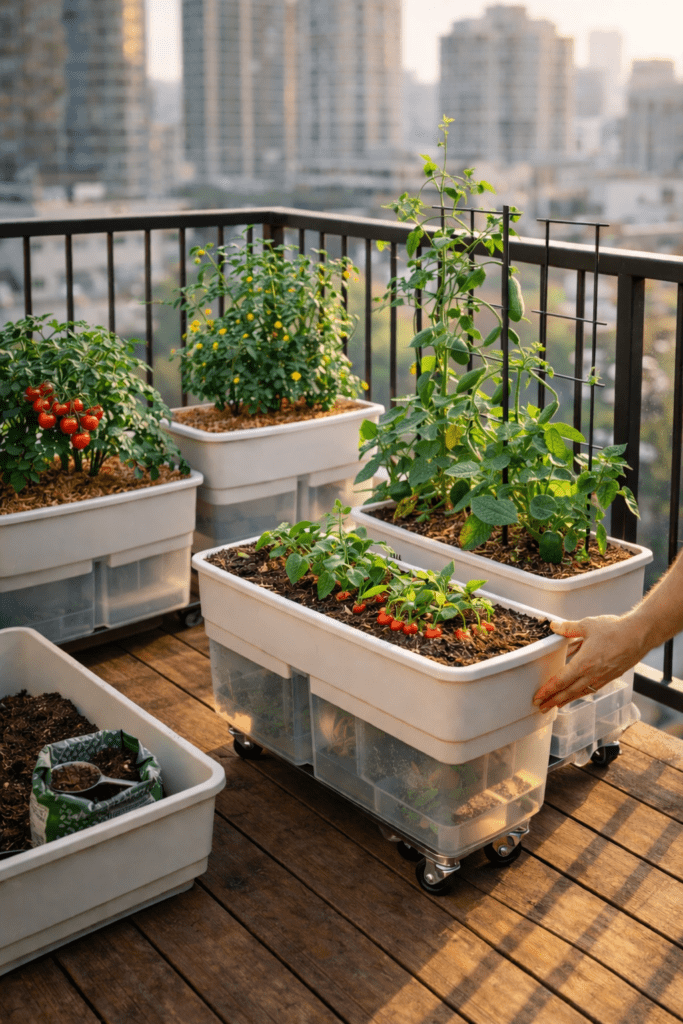
If you travel or forget watering (no judgment), self-watering planters keep roots happy and yields steady. A reservoir feeds plants from below, so you water less and stress less.
Perfect For:
- Tomatoes (determinate or dwarf varieties)
- Cucumbers and zucchini trained up a trellis
- Eggplants and bush beans
How To Nail It:
- Use a light potting mix (no garden soil) so wicking actually works.
- Add a handful of compost and a tomato-tone fertilizer at planting.
- Top off the reservoir and mulch the surface to keep moisture locked in.
Choose this when you want that “set it and forget it” vibe without sacrificing harvests.
5. Trellised Climbing Veggies For Vertical Drama
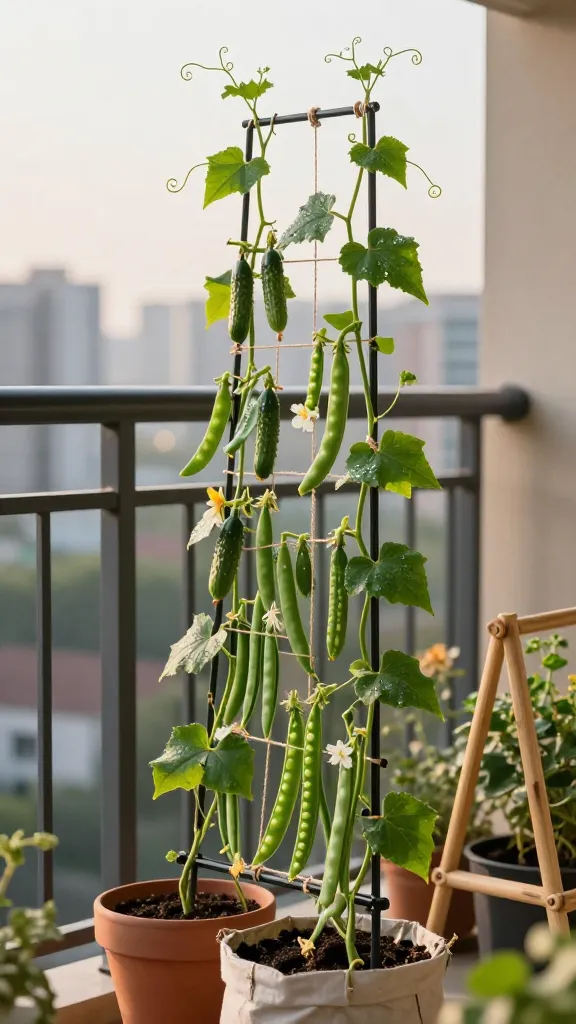
Climbers turn empty air into produce. A slim trellis or string system lets cucumbers, pole beans, and peas soar up instead of sprawling out. It looks architectural and gives you crunchy snacks right at eye level.
Good Climbers:
- Mini cucumbers and lemon cucumbers
- Pole beans (haricot verts grow like a dream)
- Sugar snap peas in spring and fall
Smart Setup:
- Anchor trellises with zip ties to railings or use freestanding A-frames.
- Train vines early; twine gently and prune runners to keep things tidy.
- Keep pots at least 12–18 inches deep for strong roots.
Use trellises when you want shade, structure, and a reliable crunch every few days.
6. Salad Bar In a Box: Shallow Troughs For Cut-and-Come-Again Greens
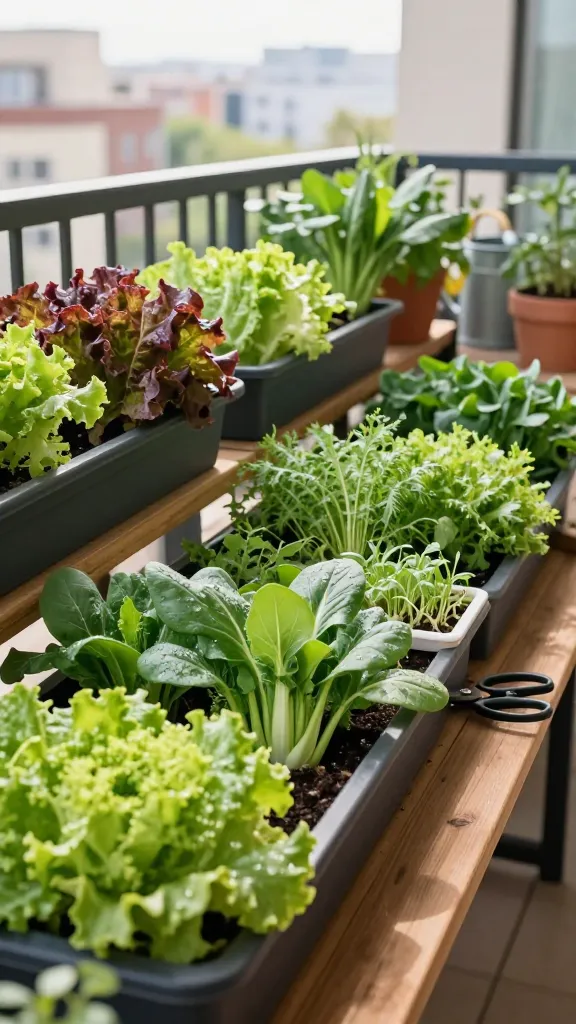
Long, shallow planters create the ultimate salad bar. You sow thickly, snip baby leaves, and watch them regrow for round two and three. It’s fast, forgiving, and wildly productive.
Plant These:
- Looseleaf lettuces, mesclun mixes, arugula
- Asian greens like tatsoi and pak choi
- Microgreens if you want instant gratification
Grower Tips:
- Depth of 6–8 inches is plenty for greens.
- Sow a new section weekly for continuous harvests.
- Water lightly but often; add liquid seaweed every other week.
Perfect for shady balconies or anyone who wants reliable salads without babying plants.
7. Crate Gardens On Casters For Sun-Chasing Flexibility
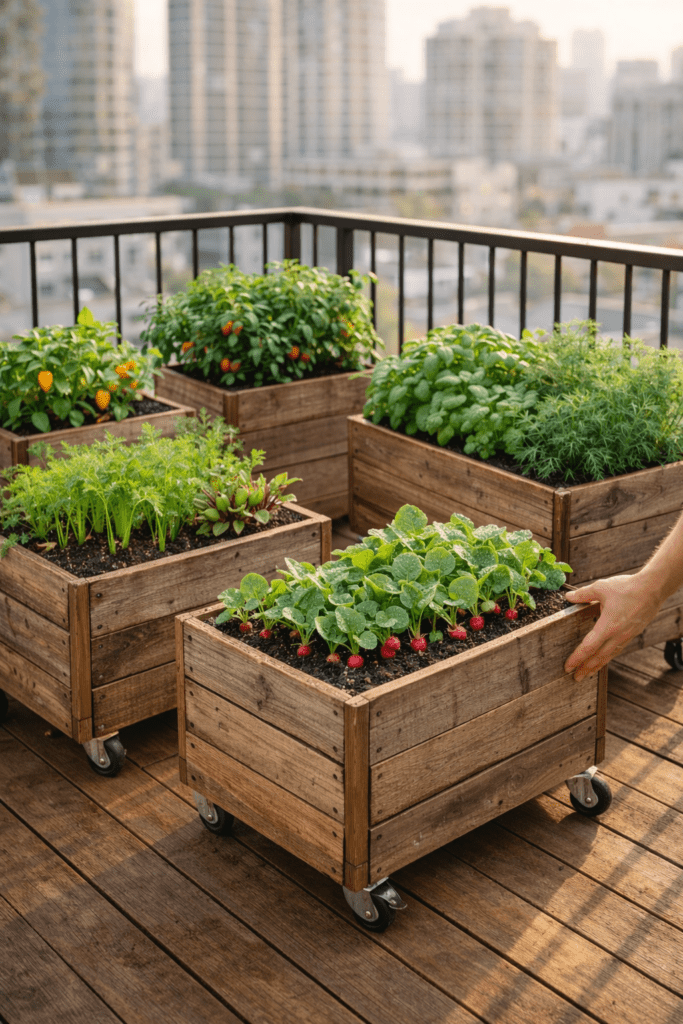
Don’t fight the sun—chase it. Wooden crates or deep storage bins on wheels let you roll your mini garden to the lightest spot at any hour. They double as cute rustic decor and serious veggie machines.
What To Grow:
- Root veggies: radishes, baby carrots, beets
- Bush tomatoes and compact peppers
- Herb medleys with basil, cilantro, and dill
Build Notes:
- Drill several drainage holes and line with landscape fabric.
- Mount locking casters to keep crates from rolling in wind.
- Use a deep mix (potting soil + compost + perlite) for roots.
Use this when your balcony gets patchy light or you rearrange often. IMO, mobile gardens are clutch.
8. Companion Planting In Fewer, Bigger Pots
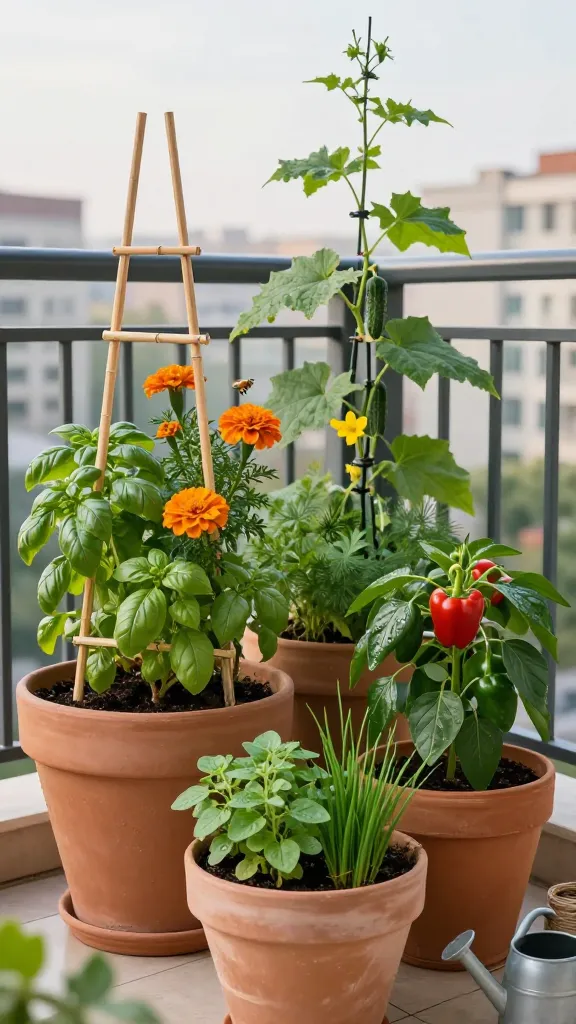
Big containers beat a bunch of tiny ones for moisture control and root health. Combine plants that help each other so every pot earns its keep. Think pest control, shade, and nutrient sharing.
Winning Combos:
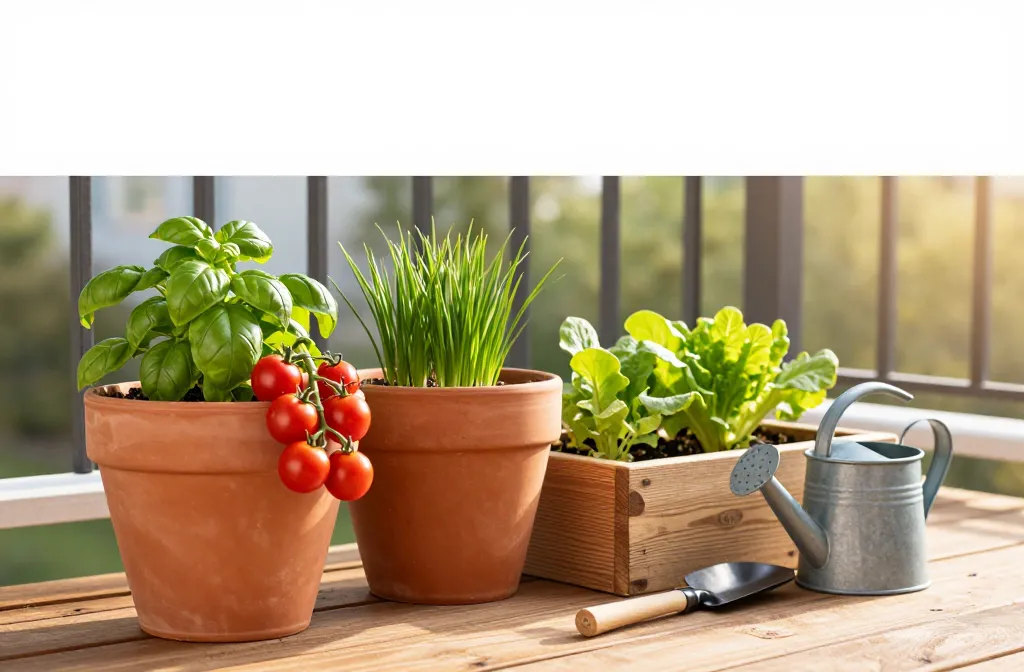
- Tomato + basil + marigold (flavor boost, pest deterrent, pollinator magnet)
- Cucumber + dill (beneficial insects, tasty pickles incoming)
- Pepper + oregano + chives (aromatics mask pests; culinary dream team)
Container Strategy:
- Aim for 14–20 inch diameter pots for main crops.
- Place tall plants center/back, herbs around edges for spillover.
- Top with mulch to stabilize moisture and temps.
Pick this when you want fewer pots to water and smarter harvests from every container.
9. Micro-Orchard Magic: Dwarf Varieties On Balconies
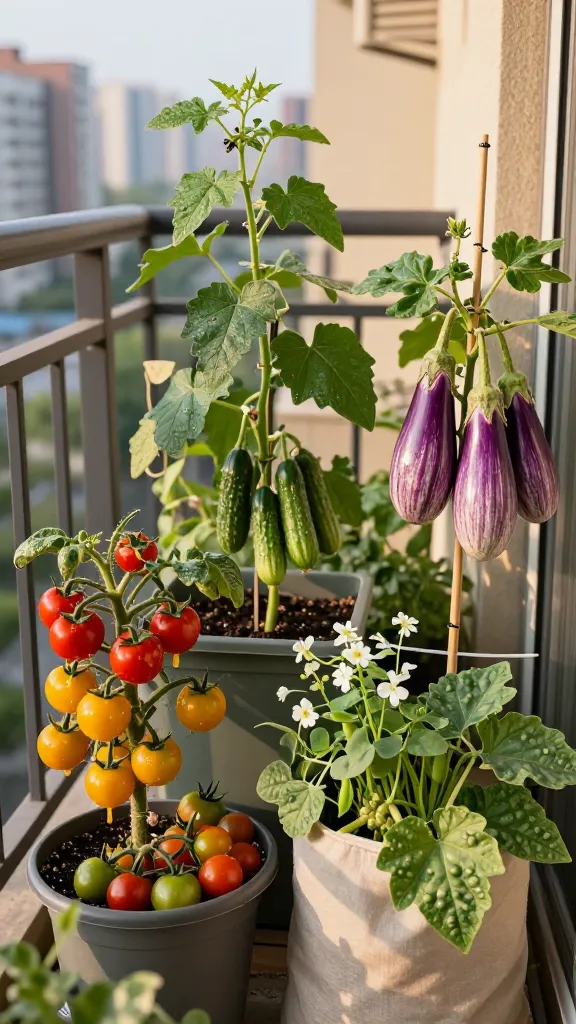
Yes, you can grow “wow” crops in small spaces. Dwarf and patio varieties deliver full-size flavor on compact plants, especially with a little pruning. They turn your balcony into a conversation piece and a snack bar.
Small But Mighty Picks:
- Dwarf tomatoes: ‘Tiny Tim’, ‘Balconi Yellow’, ‘Patio Choice’
- Compact cucumbers: ‘Bush Pickle’, ‘Spacemaster’
- Mini eggplants: ‘Fairy Tale’, ‘Patio Baby’
- Bush beans and patty pan squash
Care Tips:
- Use 5–10 gallon containers for fruiting crops.
- Feed with a balanced organic fertilizer every 2–3 weeks.
- Prune lightly to keep airflow and direct energy to fruit. Trust me, fewer leaves = tastier tomatoes.
Choose dwarfs when you crave big harvest feels without the plant taking over your entire life.
Ready to turn that modest balcony into a mini produce aisle? Start with one or two ideas, then expand as your confidence (and your salad bowl) grows. You’ll learn fast, eat fresher, and flex your green thumb every time you step outside—no backyard required.