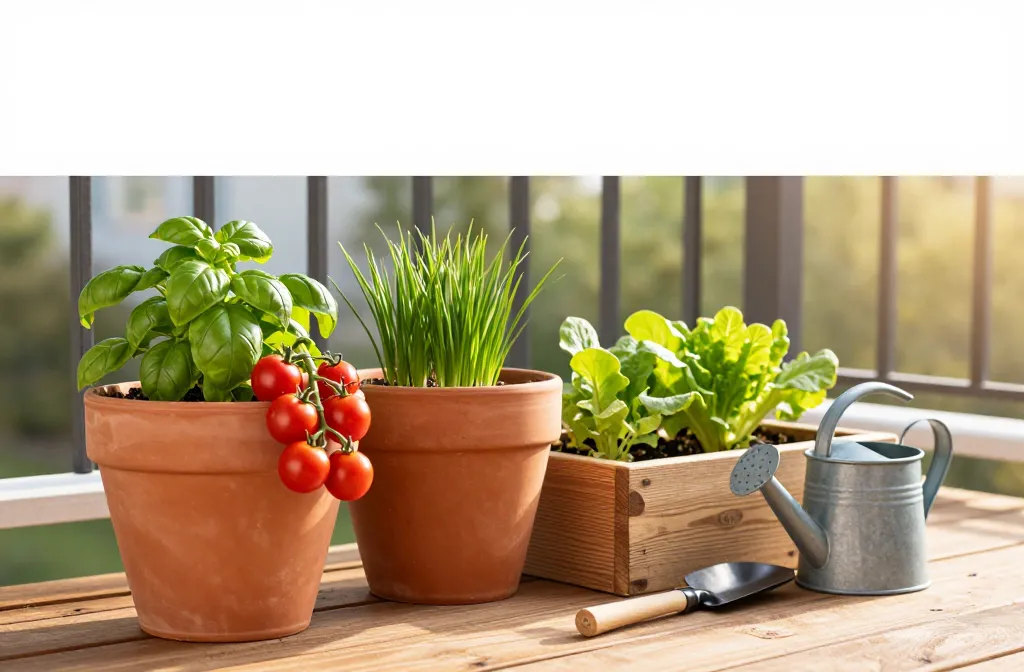

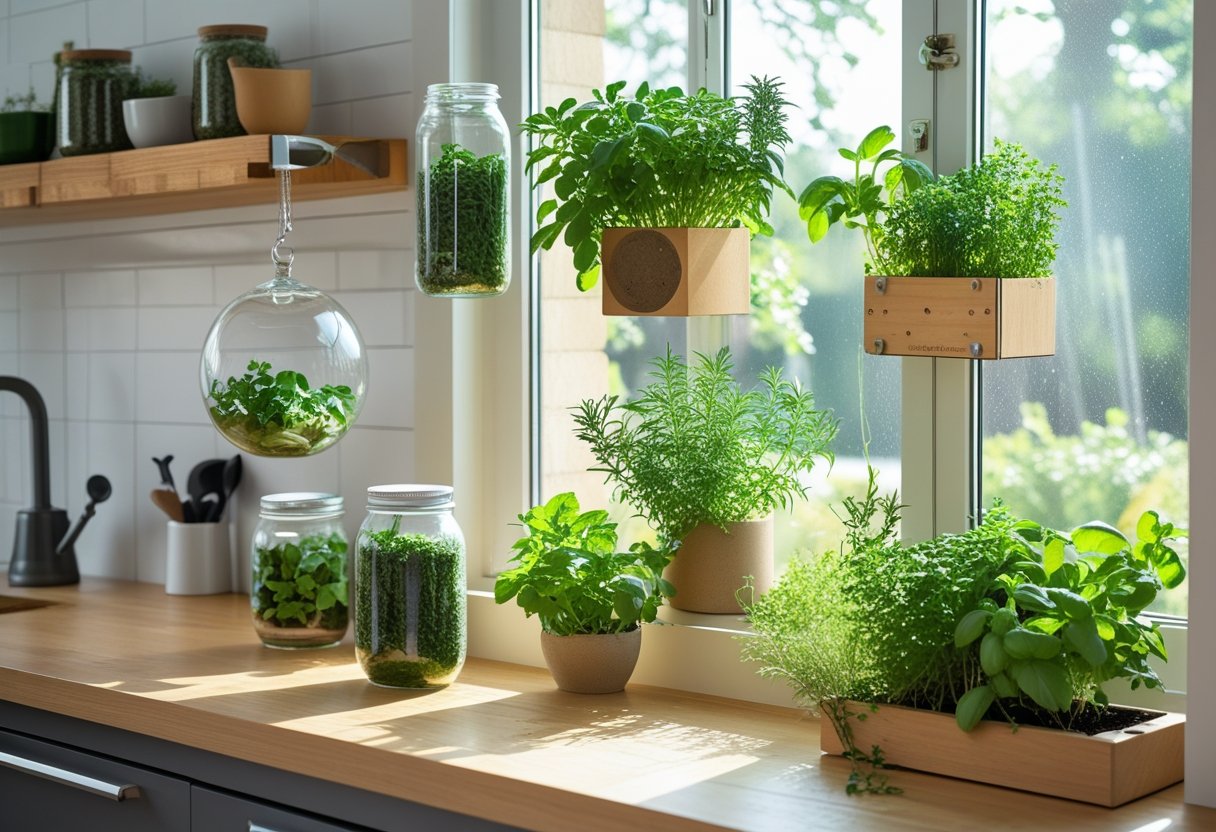

Feeling cold and dreary during those cloudy Winter days? An herb garden maybe what you need. And it can be very simple to grow one. Bring fresh flavor and fragrance into your home by growing herbs indoors this winter. You can start a productive, low-maintenance indoor herb garden with everyday containers, smart light choices, and a few care routines that fit your lifestyle. In this article, you’ll find simple, space-saving ways to cultivate basil, mint, rosemary, and more, using windowsills, jars, eggshells, tin cans, vertical setups, or small hydroponic systems to suit any kitchen or corner.
Why You Should Try Growing Herbs Indoors
First off, why should you grow herbs? Well, for starters, herbs are good for your health. (1) Growing herbs inside brings fresh flavor, useful plants, and space-efficient solutions into your home. You get immediate access to culinary staples, control over growing conditions, and ways to cut food waste and grocery costs.
Year-Round Freshness and Convenience
You can harvest basil, parsley, cilantro, or chives whenever a recipe calls for them. Indoor herb gardens avoid seasonal store shortages and wilted supermarket bunches, so you pick leaves at peak flavor and aroma.
Maximizing Small Spaces
You also don’t need a yard to grow a useful supply of herbs. Vertical planters, hanging baskets, tiered shelves, or magnetic pots on pantry doors turn narrow corners into productive growing zones.
Reducing Food Waste and Saving Money
Growing herbs indoors lowers your reliance on store-bought bunches that often spoil before you can use them. A single potted herb can replace multiple supermarket packages over a season. You save money by harvesting as needed instead of discarding half-used plastic containers. Start plants from seeds or cuttings to minimize upfront cost; a packet of basil seeds typically produces dozens of harvests.
Choosing the Best Herbs to Grow Indoors
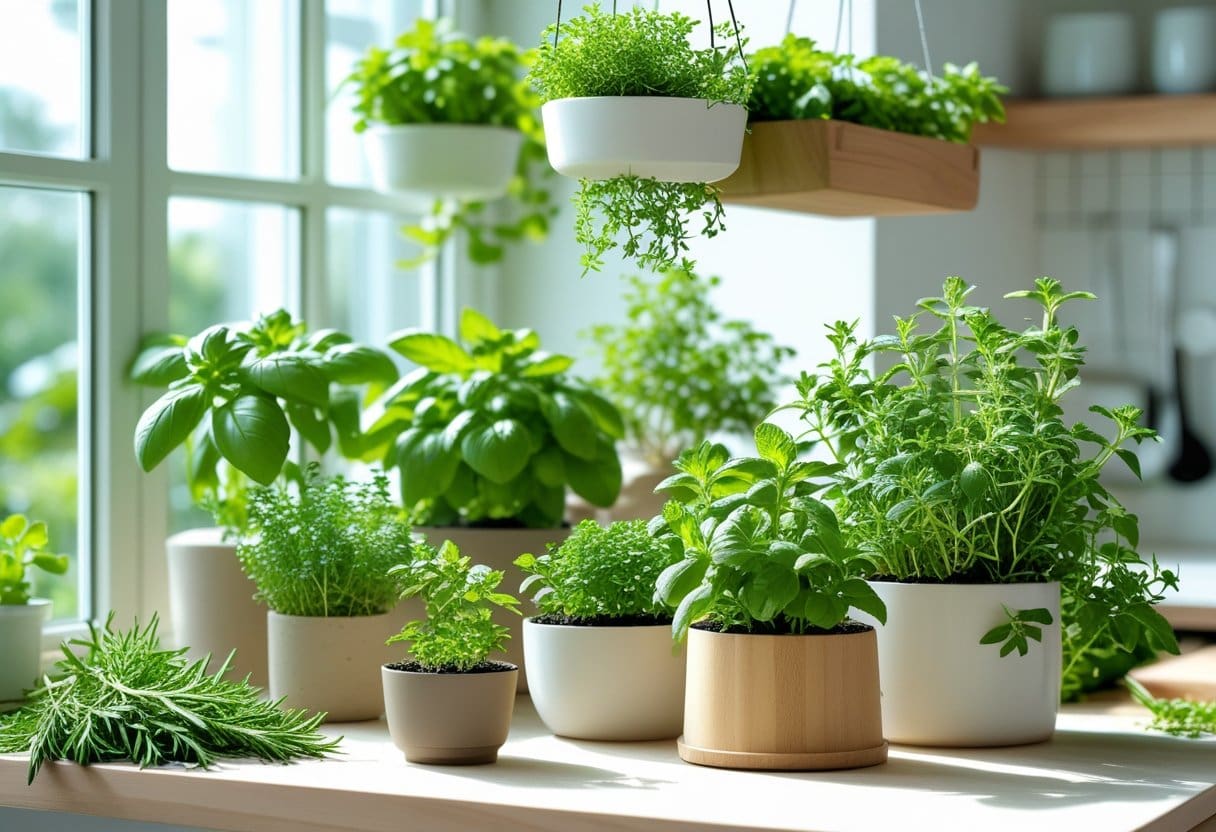
Pick herbs that match your light, space, and cooking habits so you get steady harvests and minimal fuss. Focus on plants noted below that thrive in containers, tolerate indoor light, and deliver the flavors you use most.
Top Easy-Care Indoor Herbs
These herbs tolerate variable light and forgiving watering, making them reliable first choices.
- Mint — Vigorous and pest-resistant; grows well in partial sun. Use a shallow, wide pot and trim regularly to prevent legginess.
- Chives — Compact clumping habit and hardy in low to medium light. Harvest by snipping leaves at the base to encourage regrowth.
- Parsley — Biennial grown as an annual indoors; prefers bright, indirect light and consistent moisture. Choose flat-leaf for more robust flavor.
- Thyme — Drought-tolerant and slow-growing; needs good drainage and a sunny spot. Prune flowering stems to keep flavor strong.
Rotate pots weekly if light is uneven. Use a well-draining potting mix and ensure every container has drainage holes to avoid root rot.
Flavorful Herbs for Culinary Use
Grow herbs that match the cuisines you cook most to maximize kitchen value.
- Basil — Essential for pesto and Italian dishes; needs 6–8 hours of bright light and regular pinching to prevent flowering.
- Cilantro — Quick to bolt under heat; do succession sowing in smaller pots and keep soil cool for continuous harvest.
- Oregano — Strong, concentrated flavor; tolerates lower light than basil and benefits from occasional full-sun exposure when available.
- Rosemary — Woody shrub with intense aroma; needs bright light and less frequent watering. Avoid overwatering to preserve flavor.
Keep single-purpose pots near your prep area for easy snips. Harvest in the morning for the best essential-oil concentration.
Considerations for Herb Selection
Match plant needs to your conditions and habits before buying or sowing.
- Light: Measure window exposure; south-facing gives the most sun; east or west works for many herbs. Basil, rosemary, and thyme need brighter light than parsley or mint.
- Space and pot size: Deep-rooted herbs like rosemary prefer taller pots. Shallow-rooted herbs such as chives and oregano do well in smaller containers.
- Watering and soil: Use a high-quality potting mix with perlite for drainage. Water frequency varies; mint and parsley like consistent moisture; thyme and rosemary prefer drying between waterings.
- Growth habit and maintenance: Fast growers (mint, basil) need regular pruning. Contain aggressive spreaders (mint) in separate pots to avoid takeover.
- Culinary use and turnover: Pick herbs you’ll actually use often. If you cook Mexican dishes, prioritize cilantro and oregano; for Mediterranean cooking, choose basil, rosemary, and parsley.
Creative Herb Garden Ideas for Indoor Spaces
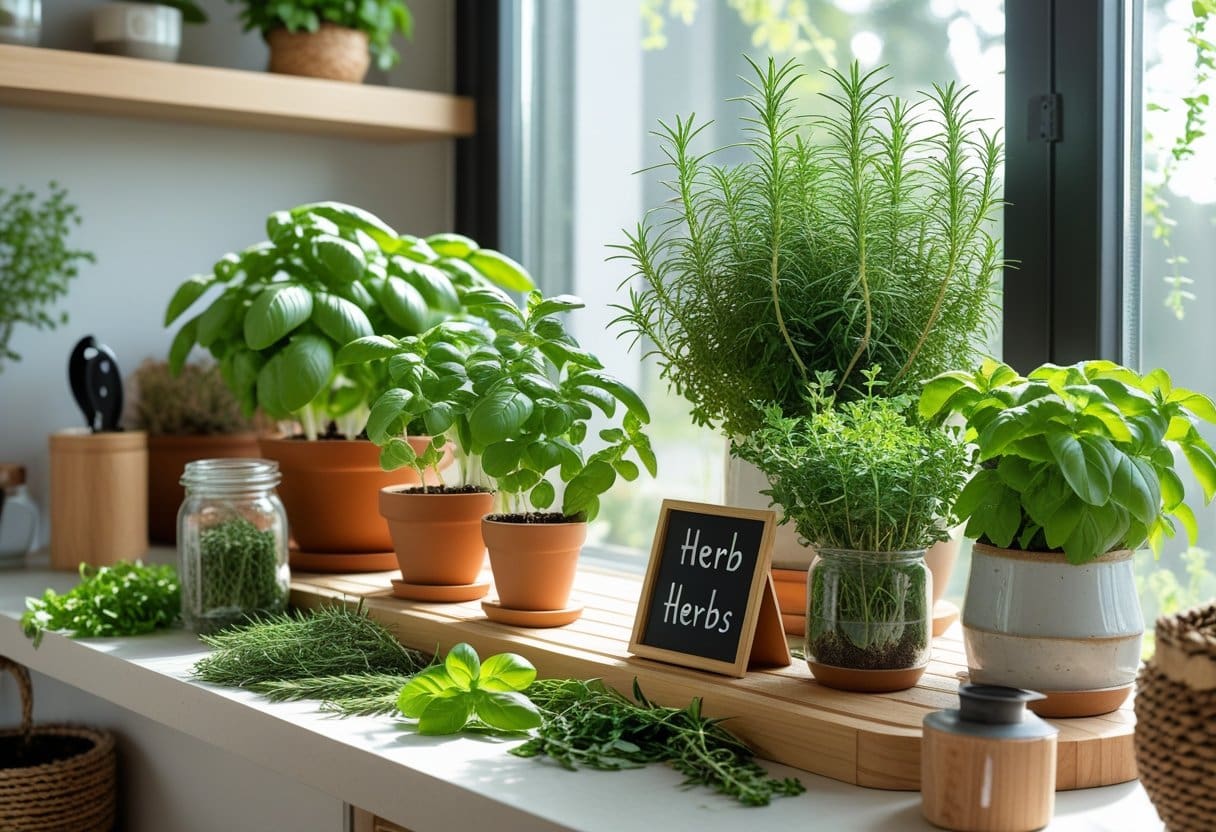
You can fit fresh basil, mint, and cilantro into small corners using everyday items. Choose containers with drainage, place them where they get 4–6 hours of light, and match pot size to each herb’s root system.
Mason Jar Herb Gardens
Mason jars make tidy, transparent containers for herbs like basil, chives, and parsley. Use wide-mouth jars for root space and add a 1–2 inch layer of pebbles or broken pottery for drainage; if you lack drainage holes, use a layer of activated charcoal above the pebbles to reduce rot.
For watering, keep soil moist but not waterlogged; water from the top or use a syringe to add small amounts so roots locate the moisture. Rotate jars weekly to prevent plants from leaning toward light.
Mount jars on a windowsill or a wall rack with jar-holding clamps to save counter space. Label each jar with the planting date and variety so you harvest herbs at peak flavor.

Repurposed Containers and Upcycled Planters
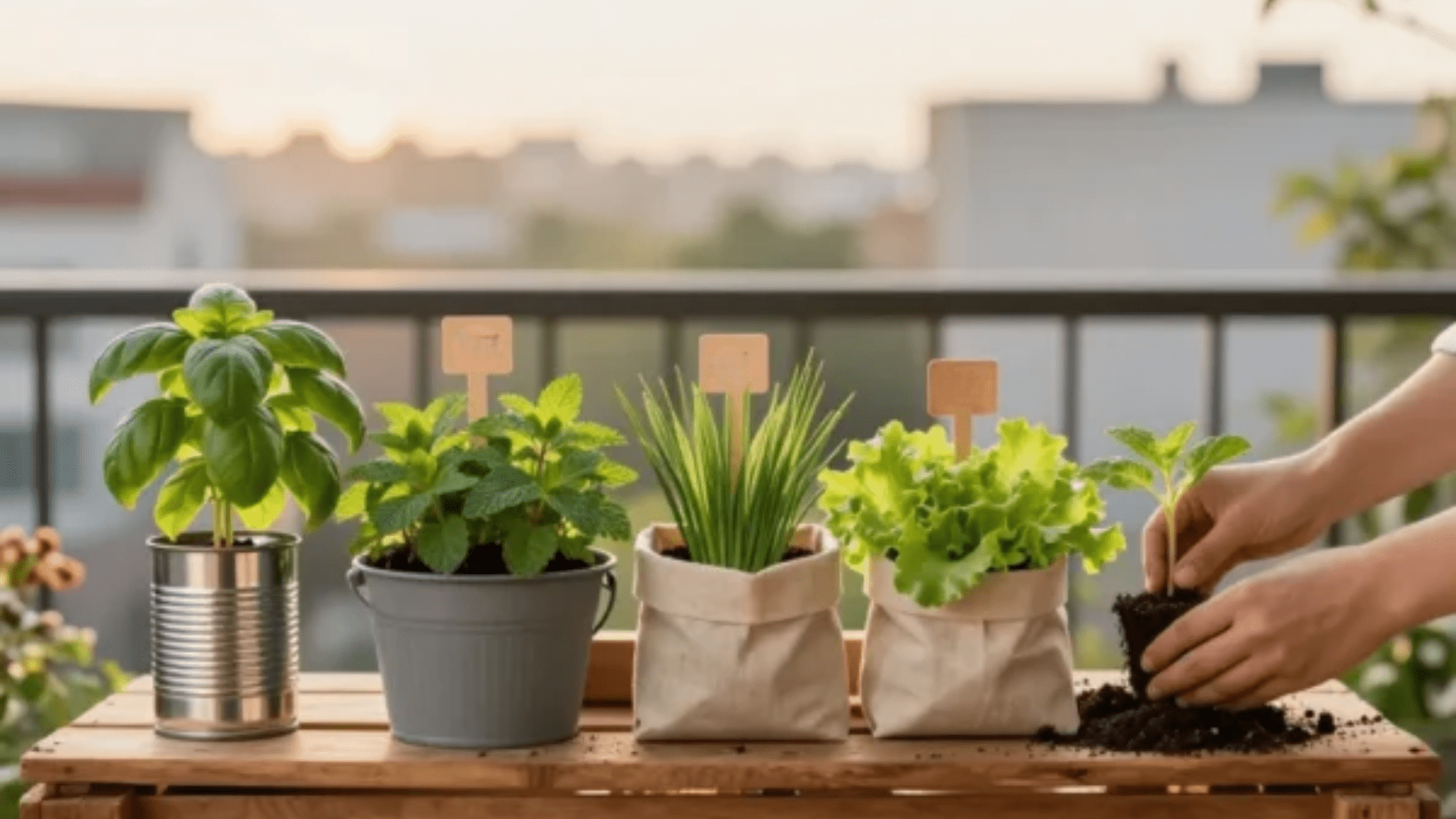
Tin cans, plastic bottles, and other repurposed containers work well when modified for herbs. Clean and paint tin cans, then punch 3–4 drainage holes in the bottom; line the inside with a bit of gravel before adding potting mix.
You can also cut plastic bottles in half to create shallow planters for thyme or oregano, or use vertical bottle stacks for micro-greens and mint. Secure bottles on a pallet or hang them with twine to create a vertical herb wall.
Match container volume to root depth: deep cans (3–4 inches) suit rosemary and sage, while shallow bottles or trays suit basil seedlings and thyme. Use potting mix with good drainage and add slow-release fertilizer at planting.

Teacups, Eggshells, and Unique Displays
Teacups and eggshells make charming displays for small herbs and starters, especially for micro-herbs, chives, or basil seedlings. For teacups, drill or punch a small hole for drainage; use a saucer underneath to catch excess water.
Eggshells act as biodegradable starter pots: fill half-shells with seed mix, place in an egg carton, and transplant the whole shell into a larger pot when roots appear. The shell adds calcium to the soil as it breaks down.
Group several small vessels on a sunny shelf and arrange by water needs to simplify care. Use labels or tags to track varieties and planting dates, and move delicate displays to a drip tray when watering to protect surfaces.

Vertical and Space-Saving Indoor Herb Gardens
Maximize sunlight, airflow, and watering control when you stack plants vertically or use hanging systems. Choose shallow-rooted herbs, plan for irrigation or easy watering access, and place taller varieties above shorter ones to prevent shading.
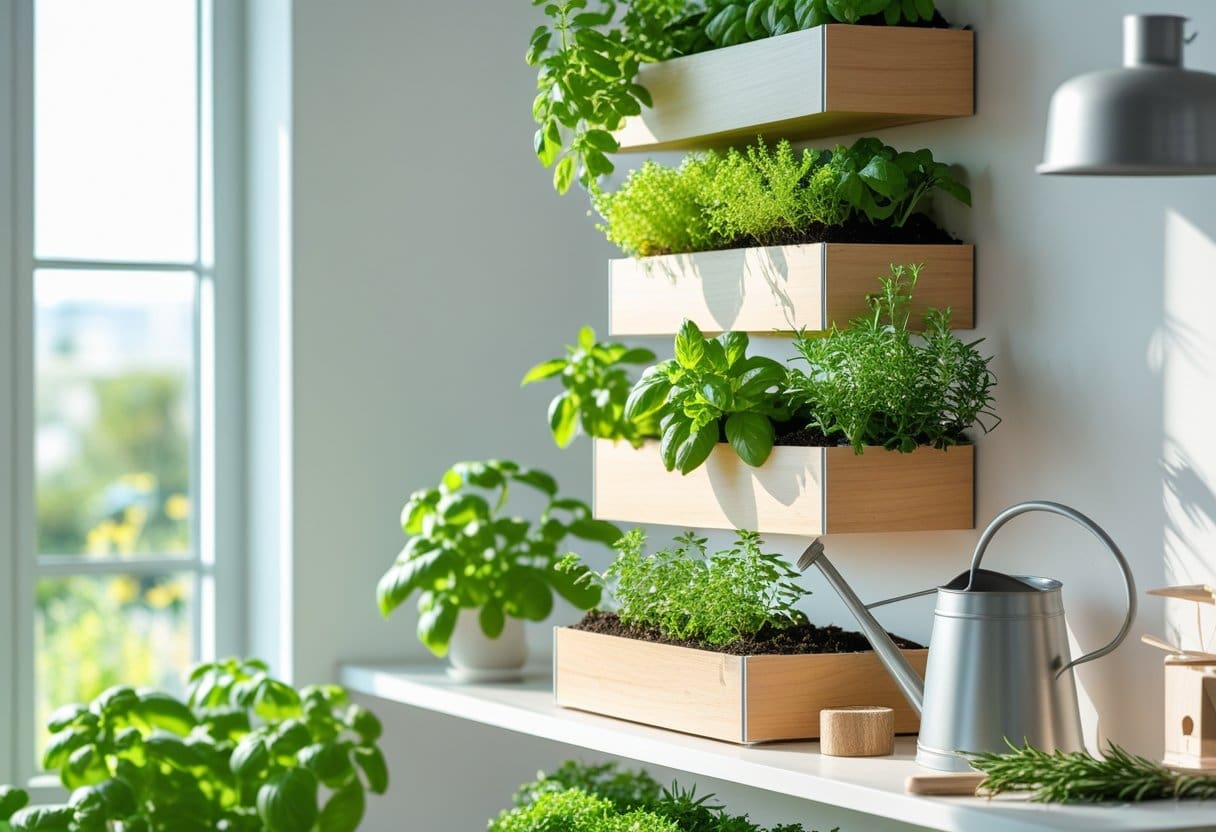
Vertical Herb Garden Walls
A vertical herb garden or herb wall turns a spare wall into a productive, living surface. Mount modular pockets, wooden planter boxes, or a slatted frame with individual pots; ensure the system supports drainage and won’t damage drywall.
Place sun-loving herbs like basil, thyme, and oregano where they get 6+ hours of light; shade-tolerant herbs such as mint and chives can occupy lower or less bright rows.
Use lightweight potting mix and shallow containers (4–6 in deep) to reduce weight and root rot risk. Incorporate a built-in drip line or removable trays for each row so you can water without disturbing neighbors’ plants.
Secure fasteners into studs or use a freestanding frame if wall anchors are questionable. Label each pocket and rotate pots seasonally to maintain even growth and harvest access.
Hanging Planters and Shelving
Hanging planters free up counter space and create layers of light exposure. Use macramé holders, ceiling-mounted rails, or wall hooks to suspend pots near south- or west-facing windows.
Select hanging baskets with liners or self-watering inserts to retain moisture for parsley, cilantro, and lemon balm. For trailing herbs like oregano, thyme, ivy-leaved geranium, leave 6–12 in of vertical clearance so foliage can drape naturally.
Shelving lets you stage pots by light needs: top shelves for basil and rosemary, middle for sage, lower for chives. Install adjustable LED grow strips under each shelf to even out light across tiers.
Keep weight limits in mind: group smaller pots on shelves and secure hanging hardware; use a water-catching tray under each shelf to protect surfaces.

Compact and Corner Herb Setups
Corners and small nooks make excellent micro-gardens when you tailor layout to available light and space. Fit a tiered plant stand or rotating corner shelf into a 2–3 ft footprint to hold 6–10 small pots.
Choose compact cultivars—dwarf basil, bush thyme, petite rosemary—and plant in 3–4 in pots to keep root systems healthy without crowding. Rotate pots monthly so each herb gets balanced light and airflow.
For very tight kitchens, mount a narrow vertical pallet or ladder shelf against the corner and attach small planters; install a clip-on grow light to supplement morning sun.
Use a simple watering routine: wick systems, a squeeze-type bottle for targeted watering, or staggered watering days for different tiers to avoid overwatering lower pots.
Modern Hydroponic and Smart Herb Garden Solutions
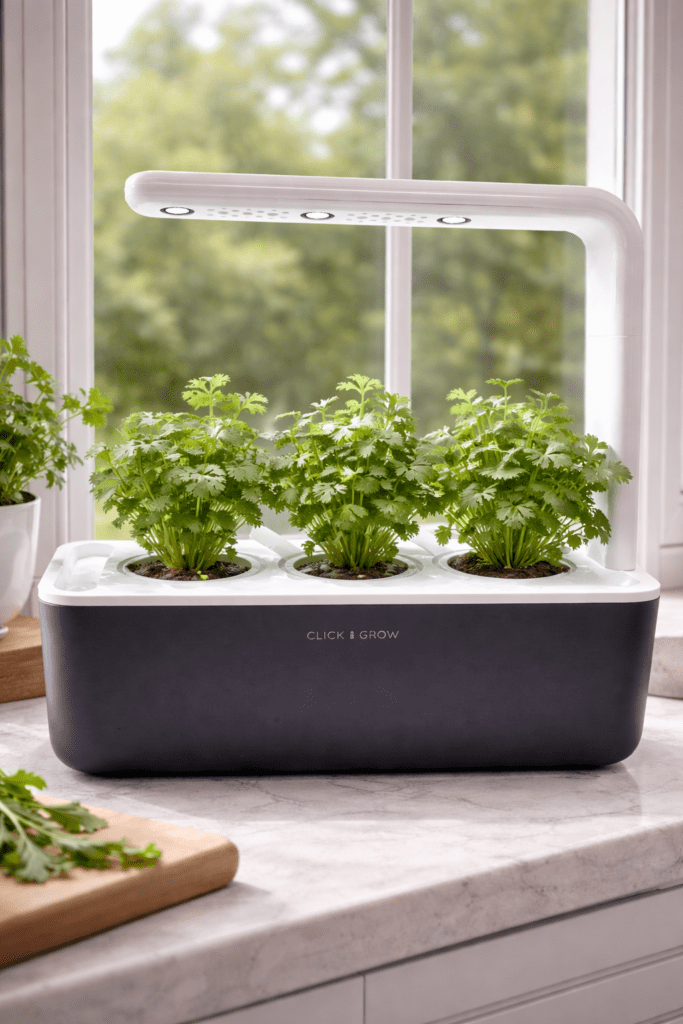
You can grow fresh herbs indoors year-round using compact hydroponic systems, plug-and-play smart gardens, or automated self-watering setups. Each approach saves space, reduces mess, and gives you more control over light, nutrients, and watering.
Home Hydroponic Herb Gardens
Home hydroponic systems circulate nutrient-rich water to plant roots without soil, which speeds growth and reduces pests. Choose between common setups: NFT (nutrient film technique) runs a thin nutrient stream past roots; deep water culture suspends roots in oxygenated nutrient solution; and wick systems passively draw nutrients to small pots.
Start with herbs that do well hydroponically — basil, mint, cilantro, and chives — and use a balanced hydroponic nutrient formula labeled for leafy herbs. Monitor EC (electrical conductivity) and pH: aim for EC 1.2–2.0 mS/cm and pH 5.5–6.5 for most herbs. Install an air pump or oxygenator for deep water systems to prevent root rot.
Space-saving options include countertop towers and repurposed mason-jar setups with small pumps. Maintain a 12–16 hour light cycle using full-spectrum LEDs and flush the reservoir every 2–4 weeks to prevent nutrient buildup.
Using Smart Indoor Garden Systems
Smart herb gardens combine LED grow lights, timed irrigation, and app or onboard controls to simplify growing fresh herbs indoors. Models vary by pod capacity; many support 6–12 herbs and include preset light and nutrient schedules tailored to common herbs.
Pick a system with adjustable light height or multiple intensity modes to match herb growth stages. Look for companion apps that track water level, filter reminders, and light schedules. Some units offer automated nutrient dosing or alerts when you need to add water or replace pods.
Smart gardens reduce guesswork for beginners but still require periodic pruning and occasional nutrient checks. Confirm compatibility with seed pods or plantable plugs if you prefer using your own seeds.
Related: 5 indoor smart herb gardens
Self-Watering and Automated Setups
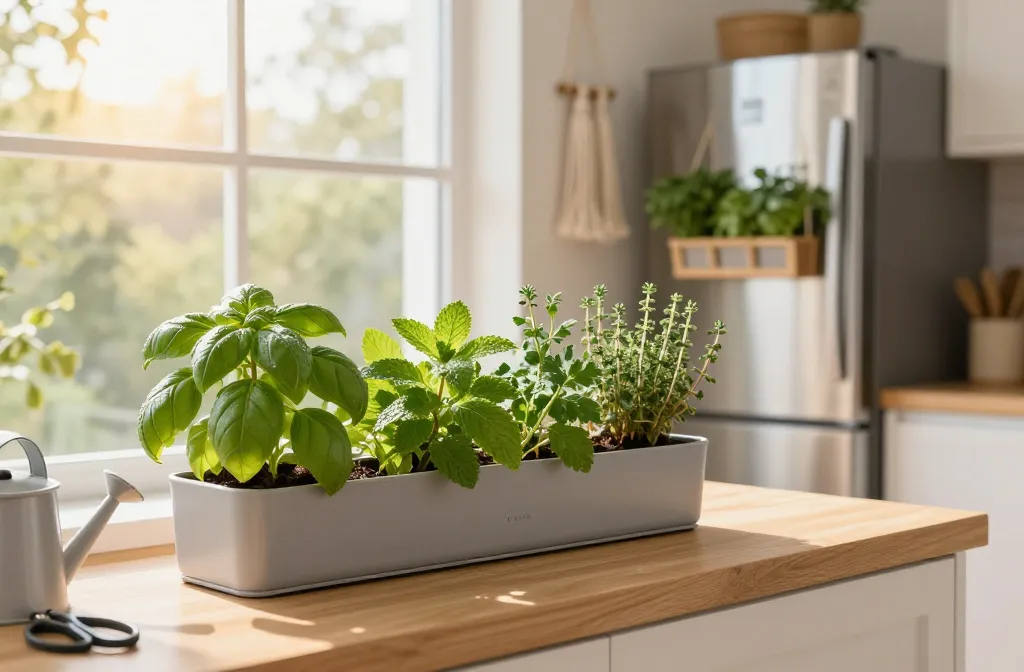
Self-watering and automated herb gardens combine reservoir-based irrigation with timers, float valves, or moisture sensors to keep roots consistently hydrated. Capillary matting and wicking systems work well for small containers and window-sill setups.
Automated setups can include a small submersible pump on a timer, a drip line with solenoid valve, or a controller that reads soil moisture and triggers water delivery. For hydroponic hybrids, use a reservoir-level sensor and a low-watt air pump to maintain oxygenation.
Maintain hygiene: clean lines, replace filters, and sterilize reservoirs every 3–6 months to prevent algae and pathogens. Use clear labeling for nutrient mixes and maintain a simple log of EC/pH and flush dates to keep your automated system reliable.
Indoor Herb Garden Maintenance and Care Tips
Keep light consistent. Most culinary herbs need 6–8 hours of bright light; place pots on a south- or west-facing windowsill or use a full-spectrum grow light for 12–14 inches above the plants if natural light is limited.
Water with attention to soil moisture. Stick your finger an inch into the pot—water when the top inch feels dry. Use pots with drainage holes and avoid letting plants sit in standing water to prevent root rot.
Choose the right soil and containers. Use a well-draining potting mix formulated for indoor plants, and pick containers sized for the herb’s root system. Repot annually or when roots circle the pot.
Fertilize lightly during the growing season. Apply a balanced, water-soluble fertilizer at half strength every 4–6 weeks. Too much fertilizer makes herbs leggy and reduces flavor.
Prune regularly to encourage bushy growth. Pinch back tips and harvest often; cutting just above a leaf node stimulates new branches. Remove yellowing or dead foliage promptly.
Manage pests and humidity. Inspect leaves weekly for aphids, spider mites, or fungus; wipe leaves and use insecticidal soap if needed. Increase humidity for Mediterranean herbs by grouping pots or using a pebble tray.
Rotate pots for even growth. Turn containers a quarter turn each week so all sides receive light and you avoid lopsided plants.
Label and track care. Keep a simple log of watering, fertilizing, and pruning to learn what each herb needs and improve your indoor gardening success.
References
- https://pubmed.ncbi.nlm.nih.gov/17022438/