
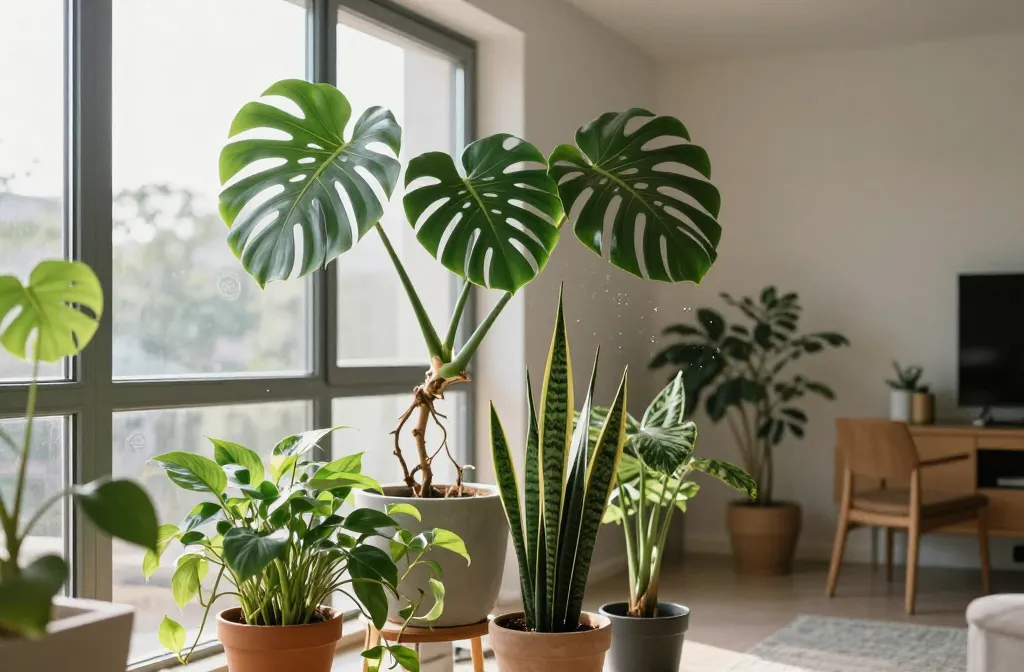

You bought that gorgeous monstera because you were told plants can purify your air on some random TikTok video. You mist the plant, and you name it. But can it actually scrub your apartment air like a tiny leafy Roomba? Short answer: kind of, but not like the Instagram memes or videos promise. Let’s separate plant myth from plant magic so you know what those green buddies can actually do.
What “toxins” are we even talking about?
We toss around “toxins” like it’s one big villain. It’s not. Indoor air usually holds a cocktail of things:
- VOCs (volatile organic compounds): Off-gassed from paint, furniture, cleaning products. Think formaldehyde, benzene, toluene.
- Odors: Cooking smells, pet funk, gym socks that should’ve retired.
- Particles: Dust, dander, smoke, aerosols.
- CO2 and humidity issues: Stale air, dry sinuses, or jungle sauna vibes.
Different problems, different solutions. Spoiler: plants don’t eat dust bunnies or instantly erase last night’s curry.
That NASA study everyone cites (and what it actually means)
Back in the 80s, NASA grew plants in sealed chambers and measured how well they removed specific VOCs. Yes, plants took up some pollutants. Cue decades of “plants purify air!” headlines.
So… why the confusion?
Because your living room isn’t a sealed chamber. Air moves. Doors open. VOCs constantly enter your space. In real-world rooms, you’d need dozens to hundreds of plants per room to recreate NASA-level effects. Not super practical unless you live in a greenhouse.
What plants can realistically do for indoor air
Let’s give credit where it’s due. Plants aren’t useless, they’re just not miracle machines. Here are some of their benefits:
- Modest VOC reduction: Some plants and their root microbes absorb a bit of formaldehyde, benzene, and friends. It’s not huge, but it’s something.
- Humidity help: Plants release water vapor. That can bump dry winter air closer to comfy. Go easy though—you don’t want mold season.
- Odor buffering (kinda): Plants don’t “eat” smells, but improved humidity and slight VOC uptake can make a stale room feel fresher.
- Psychological boost: Big one. Plants reduce stress, improve mood, and make you more likely to open a window—AKA the real air refresh button.
What plants can’t do (so you don’t set them up to fail)
Let’s manage expectations so you don’t blame your pothos for not being an air purifier.
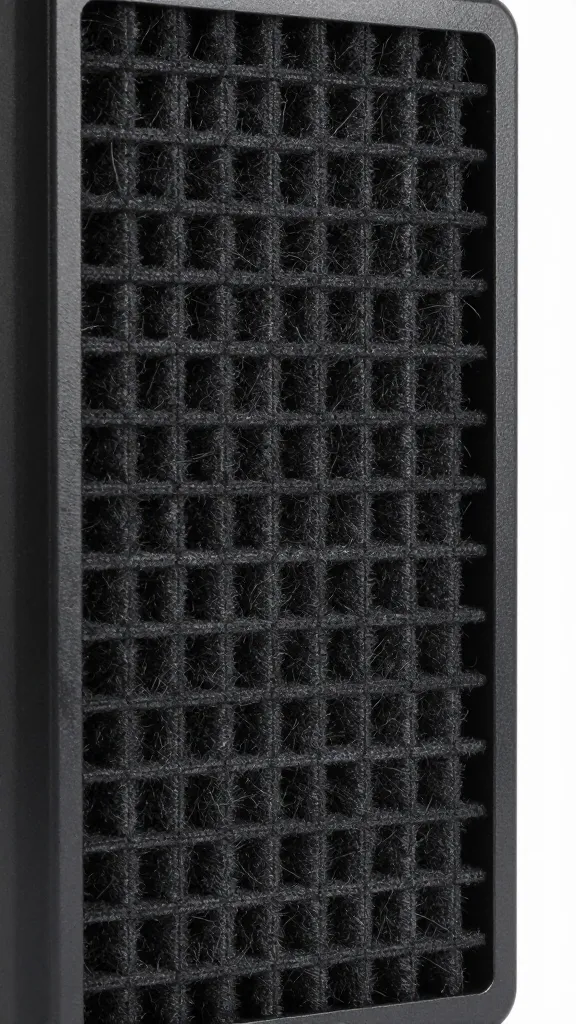
- They won’t remove particles: Dust, pollen, smoke, plants don’t filter these. Leaves collect dust, sure, but that’s just… dust sitting on leaves. Get a good air purifier and plug it in. Like this one:

- They won’t replace ventilation: Fresh air exchanges beat plants every time. Crack a window. Use your vent fan. FYI, even a small airflow change helps.
- They won’t erase strong odors: Fried fish, burned popcorn, cat-box apocalypse, use ventilation and carbon filtration.
Best plants for a tiny air-quality nudge
All of that being said, if you want plants that try their best without drama, pick hardy species with decent VOC uptake and easy care.
- Snake plant (Sansevieria): Tough, low light tolerant, survives mild neglect. Good starter.
- Pothos (Epipremnum aureum): Grows like it has Wi‑Fi. Trailing, easy to propagate, loves life.
- ZZ plant (Zamioculcas zamiifolia): Low light champ. Shiny leaves, minimal watering.
- Spider plant (Chlorophytum comosum): Classic, produces baby offshoots, decent VOC uptake.
- Peace lily (Spathiphyllum): Pretty blooms, but wants consistent moisture. Slightly dramatic queen.
- Areca palm (Dypsis lutescens): Adds humidity and beach vibes. Needs bright light.
Related: See this post on indoor plants
Pet safety note
Some plants are toxic to cats and dogs (peace lily, pothos, snake plant). If your pooch or feline chews leaves like salad, pick pet-safe options like spider plant or parlor palm. Our lab eats everything he can get, I mean everything. So, we have to keep our peace lily up away from him.
How to actually clear “stinky air”
If smell is the problem, use a combo strategy. Plants can play a cute supporting role.
- Source control: Take out the trash, clean the litter box, store chemicals in sealed containers.
- Ventilation: Open windows, turn on exhaust fans, cross-vent with a small fan for 10–20 minutes.
- Filtration: Use a HEPA purifier for particles and a purifier with an activated carbon filter for odors and VOCs.
- Deodorize smartly: Baking soda in the fridge, vinegar simmer for kitchen smells, wash soft furnishings.
- Then add plants: They’ll keep things feeling fresher and look fantastic while they’re at it.
Making plants work harder for you
If you want to squeeze maximum benefit from your indoor jungle, try this:
- Go for quantity, within reason: A cluster of 5–10 medium plants in a living room can move the needle slightly more than a lonely fern.
- Use active airflow: A gentle fan across leaves increases gas exchange. No gale-force winds—just a subtle breeze.
- Keep leaves clean: Dust blocks pores. Wipe with a damp cloth monthly.
- Healthy roots matter: A lot of VOC breakdown happens in the root zone with beneficial microbes. Don’t overwater, and repot with fresh mix yearly.
- Light is life: Brighter indirect light fuels growth, and growing plants do more work. Put them near windows when possible.
DIY biofilter concept (for the nerds)
Some folks build “active” planters with fans that pull room air through the soil. These mimic research-grade biofilters and can boost VOC removal. It’s a fun project if you’re handy, but it’s not a substitute for ventilation, IMO.
The honest bottom line
Plants help, but they’re not your main air-cleaning strategy. You’ll get the best results when you:
- Ventilate first (fresh air exchanges)
- Filter second (HEPA + activated carbon if odors/VOCs bug you)
- Use plants third (for small gains, humidity balance, and sanity)
You end up with cleaner air, a prettier space, and fewer headaches—literal and metaphorical.
FAQ
Do I need 100 plants to notice any difference?
No, but you won’t transform air quality with one pothos either. A small cluster can make a room feel fresher, especially with good light and a little airflow. Still, ventilation and filtration do the heavy lifting.
Which plant is the best “air purifier” plant?
There isn’t a single champ. Snake plant, pothos, spider plant, peace lily, and areca palm all perform similarly in real homes. Pick what you’ll actually keep alive. Consistency beats theoretical lab all-stars.
Can plants remove mold spores or smoke?
Not effectively. For particles like spores and smoke, use a HEPA air purifier and fix moisture problems. Plants won’t solve mold, and they won’t undo wildfire smoke—sorry.
Will more plants make my apartment too humid?
Possibly, if you go full jungle in a tiny space or overwater. Watch for condensation on windows and musty smells. If that happens, pull back on watering, add airflow, and open windows.
Do succulents help with air quality?
A little, but not much. Succulents transpire less and grow slower, so they contribute less to VOC uptake and humidity. Keep them for the looks and the low-maintenance vibe.
Is it true snake plants improve oxygen at night?
They use a form of photosynthesis that can take in CO2 at night, but the oxygen boost is tiny in a normal room. It won’t change your sleep quality in any measurable way. Still a great, tough plant though.
Conclusion
Can indoor plants really get rid of toxins and stinky air? They can help—just don’t expect miracles. Think of plants as your charming sidekicks while ventilation and filtration play the heroes. Fill your space with a few hardy green friends, open a window, run a purifier when you need it, and enjoy air that feels cleaner and a home that looks alive. That’s a win, FYI.