
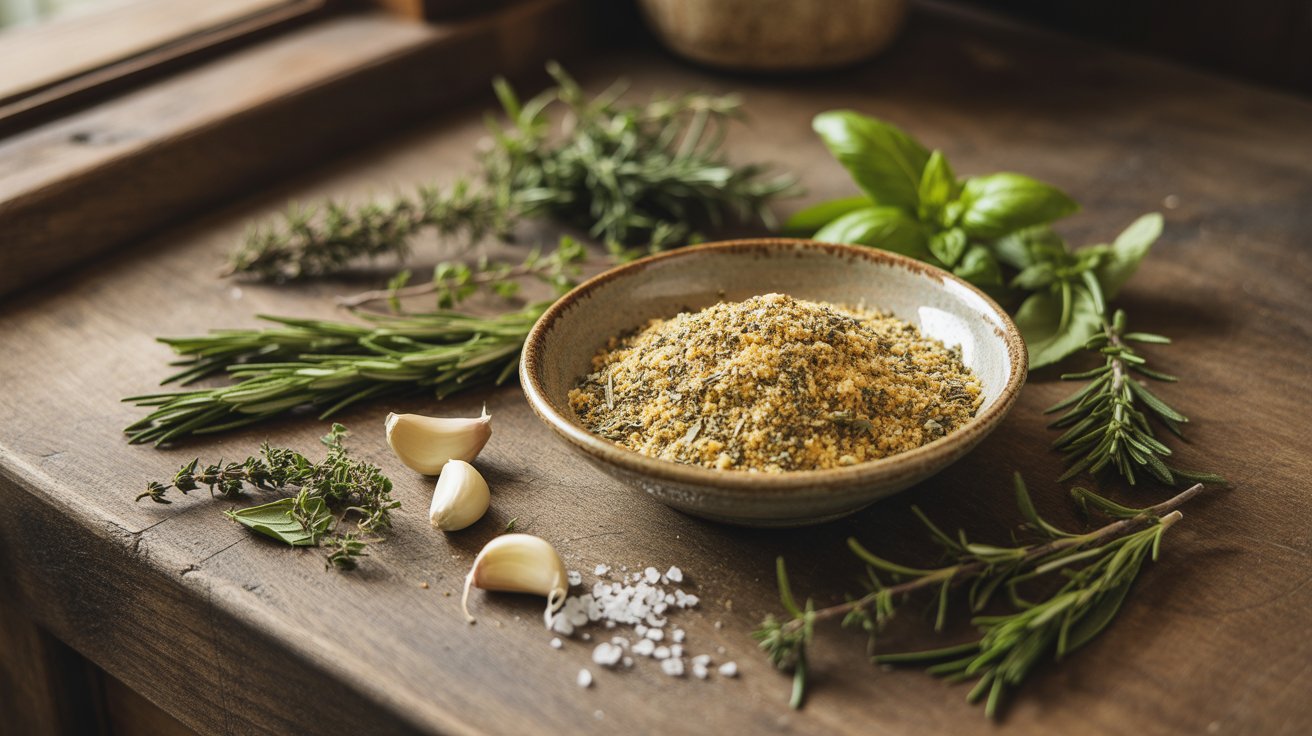

Making your own garlic and herb seasoning is simple, cost-effective, and lets you control the quality of your spice blend. You only need a few basic ingredients like dried garlic, herbs, salt, and pepper to create a versatile seasoning. By customizing the blend to your taste, you avoid preservatives and additives found in store-bought versions. This homemade mix can quickly become a staple in your kitchen, adding fresh, balanced flavor to everyday meals without any extra effort.
Essential Ingredients for Garlic and Herb Seasoning
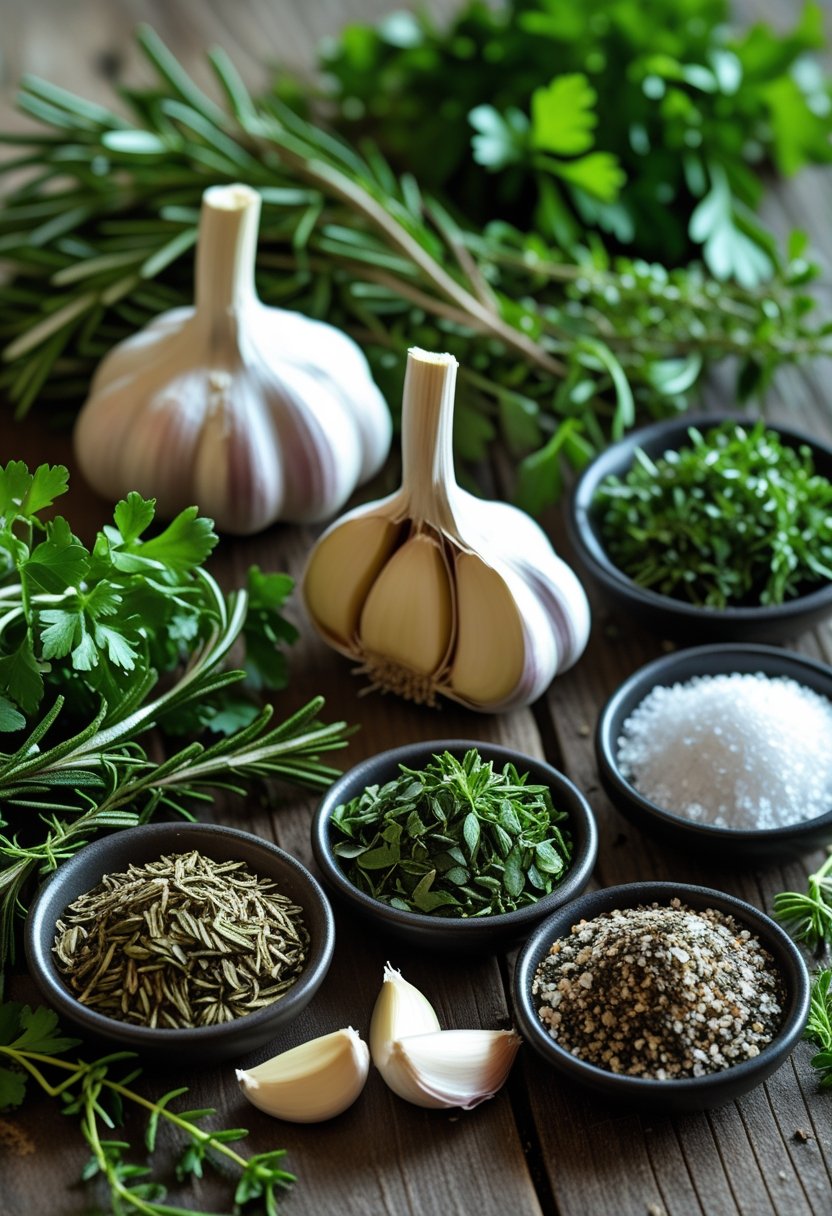
Your homemade garlic and herb seasoning relies on carefully chosen garlic types, a balanced combination of herbs, and complementary spices and salts. Each element plays a crucial role in building the flavor profile and versatility of your seasoning blend.
Related: See other articles on herbs
Best Types of Garlic
The base of your seasoning is garlic, and using the right type matters. Garlic powder is the most common choice for seasoning blends because it distributes evenly and has a consistent flavor.
Dehydrated garlic flakes provide a stronger, more pungent taste if you prefer a bolder garlic presence. Avoid fresh garlic in dry blends, as it contains moisture that can cause clumping and spoilage.
Look for garlic powders or flakes that are free from additives like anti-caking agents to keep your mix pure. Freshness impacts potency, so choose products with recent expiration dates for the best flavor.
Recommended Herbs
Herbs create the characteristic “herb” portion of your seasoning. Popular choices include dried parsley, oregano, thyme, and basil. These herbs offer a balanced mix of earthiness, brightness, and warmth.
Parsley is mild and works as a great filler, while oregano and thyme provide depth with a slightly bitter and aromatic note. Basil adds a hint of sweetness and complexity.
Use dried herbs that are finely crushed or ground for better incorporation. Freshness is key. If your herbs are older than a year, replace them as they lose flavor intensity over time.
Spices and Salts to Enhance Flavor
To round out your garlic and herb seasoning, include onion powder, black pepper, and salt. Onion powder adds a subtle sweetness and savory depth without overpowering the blend.
Freshly cracked black pepper gives a mild heat and complexity. Adjust pepper quantity to your taste, but don’t skip it as it brightens the overall profile.
Salt is essential; use fine sea salt or kosher salt to evenly distribute flavor without graininess. Start with moderate amounts, and increase gradually to avoid oversalting.
You can also add optional ingredients like crushed red pepper flakes or smoked paprika for variation, but keep your base simple for broad use.
How to Grow Ingredients Yourself
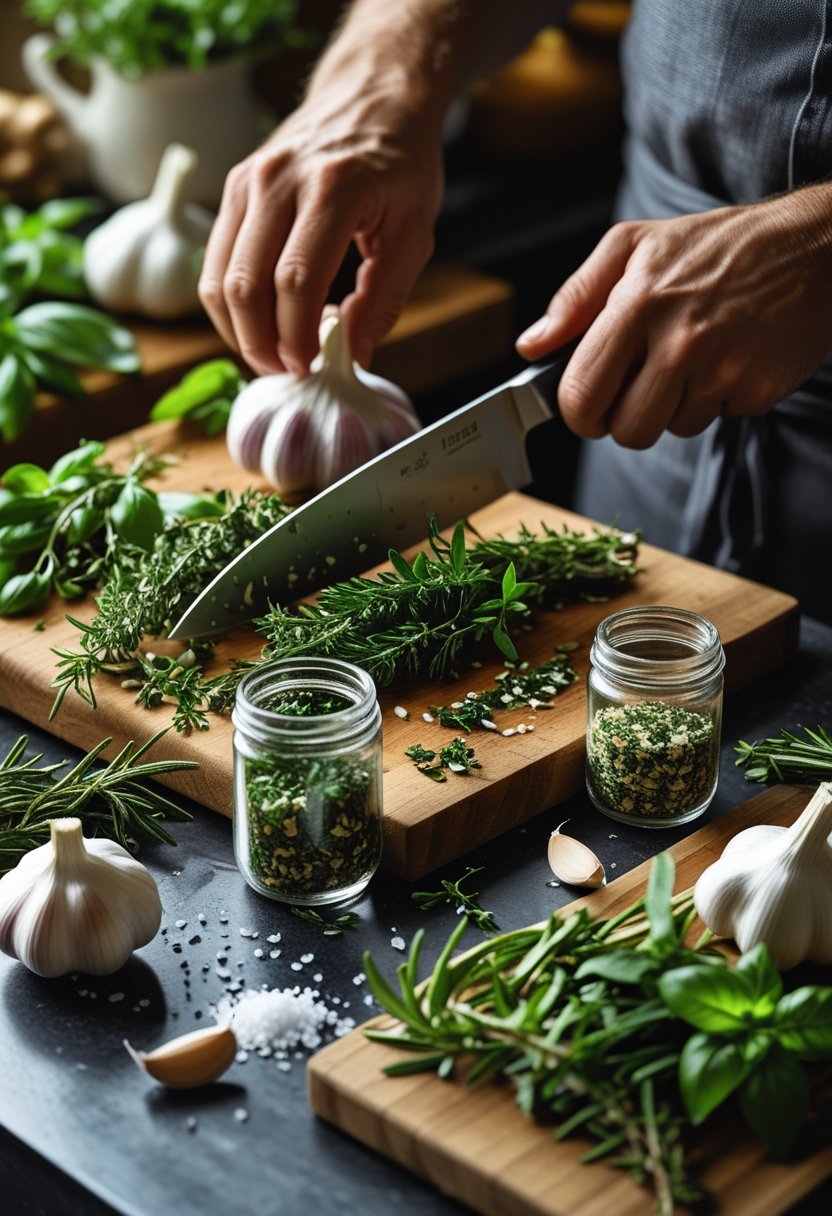
Growing your own garlic and herbs requires some planning and attention to detail. You’ll need to decide which garlic type works best for your needs, know the right conditions for each herb, and understand how to preserve their flavors effectively.
Choosing Between Garlic Bulbs and Chives
Garlic bulbs offer a robust flavor that is central to most garlic and herb seasonings. When growing garlic, choose between hardneck and softneck varieties based on your climate; hardneck suits colder areas, softneck thrives in warmer zones. Always check your growing zone, but typically garlic bulbs should be planted anywhere from October to December and left to grow over the winter. Plant individual cloves in loose, well-drained soil about 2 to 3 inches deep and spaced 4-6 inches apart. Straw over the top with heavy mulch.
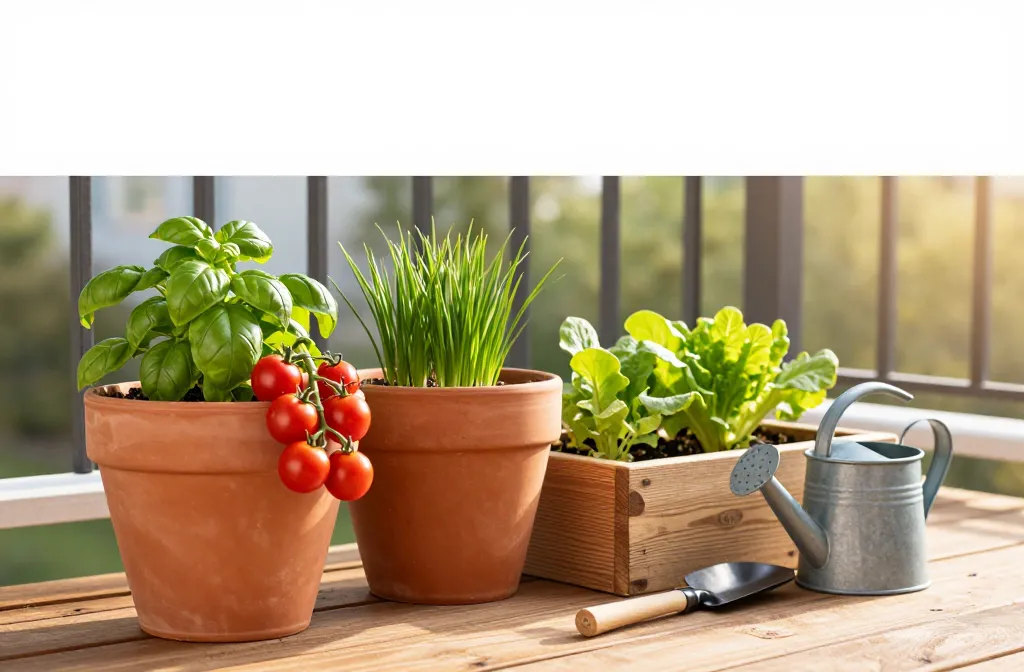
Chives on the other hand are a great complement and require less space and maintenance. They grow well in pots or garden beds with moderate sunlight. You can harvest chives regularly by cutting the leaves near the soil line, encouraging fresh growth for continuous use in your blends. We bought this kind and like them:

How To Grow Fresh Herbs
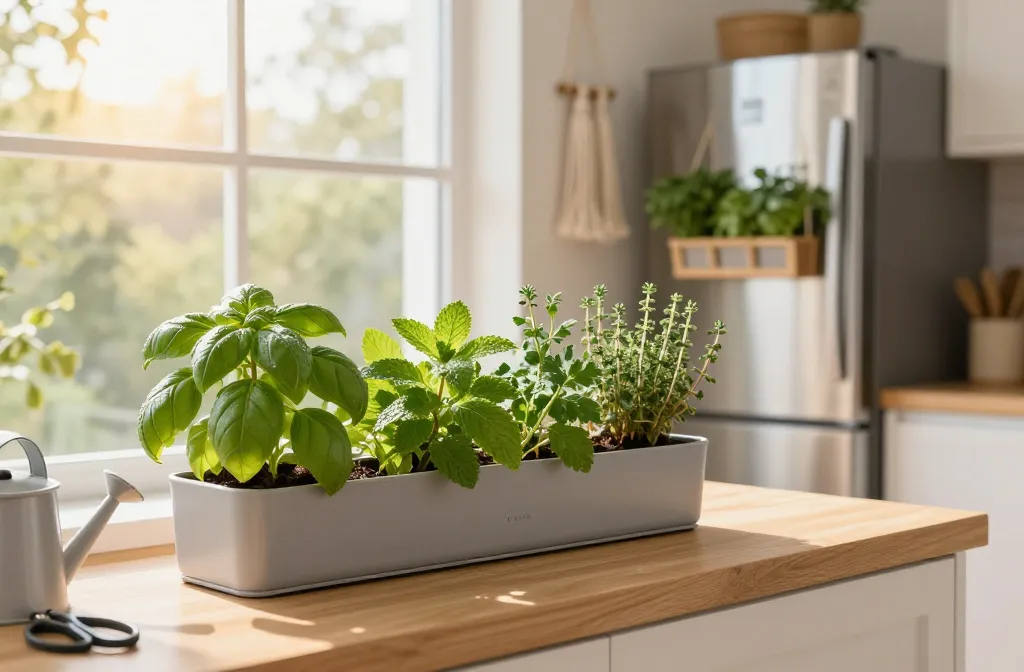
Most herbs used in garlic and herb seasoning like parsley, oregano, and thyme require full sun—at least 6 hours a day. Plant them in well-draining soil rich in organic matter. Water consistently but avoid overwatering, as herbs prefer slightly dry conditions once established.
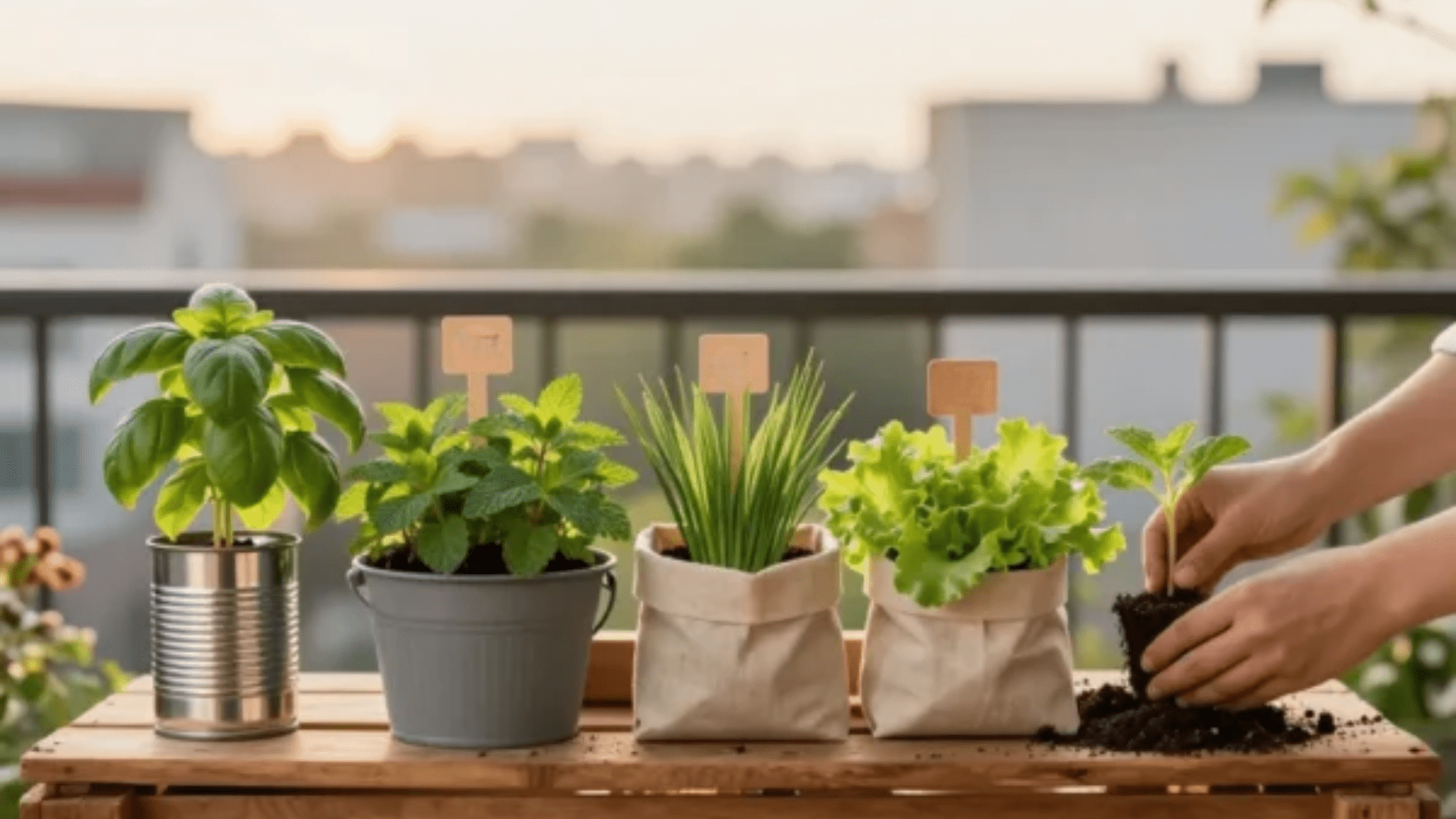
Space your herbs 8-12 inches apart for optimal air circulation. Regularly pinch back new growth to prevent flowering, which can reduce flavor intensity. Container gardening can be effective if you control soil quality and drainage carefully.
Drying and Storing Fresh Herbs
Dry your herbs soon after harvesting to preserve flavor. Tie small bundles with string and hang in a warm, dry, and well-ventilated area away from direct sunlight. Alternatively, use a dehydrator set to low temperatures for faster results.
Once fully dry, crumble the herbs and store them in airtight containers such as glass jars. Keep containers in a cool, dark place to maintain potency. Properly dried herbs retain flavor for up to one year but begin to lose strength after six months.
Preparation Techniques for Maximum Flavor
When preparing your garlic and herb seasoning ingredients, chop fresh herbs finely to release oils before drying. For garlic, peel and slice cloves thinly or crush them lightly to bring out more flavor during drying.
Avoid overheating garlic during drying, as it can turn bitter. Combining the right moisture content with slow drying increases the seasoning’s aroma and intensity. Before blending, gently toast dried herbs in a dry pan to enhance their flavors without burning.
Blending Your Garlic and Herb Seasoning
To make a well-rounded garlic and herb seasoning, you’ll focus on how you grind and mix the ingredients, balance the flavors, and decide on the texture and consistency. Each step affects how your seasoning blends with dishes and how intense the flavors will be.
Grinding and Mixing Methods
Start by choosing how to process your herbs and garlic, as this influences the final texture and flavor release. You can grind dried herbs and garlic powder using a spice grinder for a fine, even blend. Alternatively, use a mortar and pestle for a slightly coarser texture that releases essential oils more effectively.

When mixing, ensure even distribution of all ingredients. Use a spoon or your hands to combine herbs, garlic, salt, and any other spices thoroughly. This prevents clumping and uneven seasoning in your dishes.
Store your blend in an airtight container immediately to preserve freshness and prevent moisture exposure.
Balancing Flavors
Balancing the savory aroma of garlic with herbs like thyme, oregano, and parsley is crucial. Typically, garlic should be prominent but not overpowering. Use:
- 2 parts garlic powder
- 1 part dried herbs (blend of thyme, parsley, oregano)
- 1 part salt
Adjust the salt based on your taste or dietary needs.
Consider adding subtle hints of onion powder or black pepper to enhance complexity without masking the core flavors. Taste as you go, adjusting herbs to suit whether you want a sharper or milder herbal note.
Adjusting Texture and Consistency
Texture depends on how finely you grind your ingredients. A fine powder is ideal for sprinkling on pasta or mixing into sauces. Coarser blends work well for rubs or spreading on bread.
If using fresh garlic, blend it with dried herbs and then dehydrate the mixture or use it quickly to avoid spoilage.
You can also mix your seasoning with softened butter for a smooth herb spread. This requires a uniform powder for easy blending.
Store your seasoning in a dry environment to maintain the texture and prevent clumps caused by humidity.
Storage and Shelf Life Tips
Proper storage is crucial to keep your garlic and herb seasoning flavorful and safe to use over time. You need airtight containers that prevent moisture and air exposure. Understanding how to avoid freshness loss and spotting signs of spoilage will help you maintain the quality of your seasoning.
Best Storage Containers
Use airtight containers like glass jars with tight-fitting lids to store your garlic and herb seasoning. Glass helps prevent moisture absorption and does not retain odors, which keeps the flavors pure.
Avoid plastic containers that aren’t fully sealed because they can allow air and humidity inside, causing the seasoning to clump or lose potency. Containers that protect your spices from light, such as opaque or tinted jars, also help maintain flavor.
Label your containers with the date made to track freshness. Store them in a cool, dark, and dry place away from heat sources like stoves or direct sunlight.
Protecting Freshness
To keep your seasoning fresh, avoid moisture contamination at all costs. Always use a dry spoon when scooping out the mix to prevent mold growth.
Keep the container sealed tightly after each use and avoid leaving it open for extended periods. Humidity triggers clumping and accelerates flavor loss over time.
Store your seasoning away from any source of heat or steam, such as near a sink or stove, which can degrade the herbs and garlic powders. Ideally, maintain a stable, cool environment where the temperature does not fluctuate.
Recognizing Spoilage
Check your seasoning regularly for signs of spoilage. If you notice discoloration, odd smells, or clumps that don’t break apart easily, these are indicators that moisture has compromised the mix.
Spoiled seasoning may develop off-flavors or lose its potency completely. Mold or unusual textures mean it’s best to discard the batch rather than risk food safety.
If you store your blend properly, it can last 6-12 months, but always trust your senses before use. Keeping track of the preparation date helps you avoid using it beyond its prime.
Creative Uses for Garlic and Herb Seasoning
You can use garlic and herb seasoning to add depth and flavor across many types of dishes. It works well as a dry rub, a mix-in for liquids, or a topping to bring a fresh, savory touch to simple recipes.
Enhancing Meats and Vegetables
Sprinkle garlic and herb seasoning on meats before grilling, roasting, or pan-searing to infuse rich, aromatic flavors. It pairs well with chicken, beef, pork, and fish, enhancing natural juices without overwhelming the original taste.
Use it on vegetables like roasted potatoes, carrots, zucchini, or mushrooms. Toss the veggies with olive oil and the seasoning before cooking to create a crispy, herbaceous crust that complements their natural sweetness.
For marinades, mix the seasoning with oils, lemon juice, or vinegar. This tenderizes meat and boosts flavor penetration for a more balanced and juicy result. You control the intensity by adjusting the amount, making it suitable for everyday or special meals.
Mixing Into Sauces and Dressings
Garlic and herb seasoning can easily be stirred into sauces and dressings to add complexity without additional effort. Blend it into tomato sauces, creamy dips, or gravies for a subtle garlic and herbal aroma.
Try adding the seasoning to homemade vinaigrettes with olive oil and vinegar for salads that benefit from a crisp, aromatic note.
Mix it into sour cream or yogurt to create quick, flavorful dips for vegetables or chips. The balance of garlic, herbs, and salt will enhance the overall taste without needing many other ingredients.
Seasoning Breads and Snacks
Use garlic and herb seasoning to flavor breads and snacks for an effortless savory boost. Before baking, brush bread dough or rolls lightly with olive oil, then sprinkle the seasoning on top for crisp, flavorful crusts.
It also works well sprinkled on popcorn, roasted nuts, or homemade chips for a tasty snack option without added sugars or artificial flavors.
For garlic bread, mix the seasoning into softened butter and spread it on slices before toasting or baking. This adds flavor that is fresh, herbaceous, and adaptable to your preference.
Troubleshooting and Tips for Success
To get the best flavor from your garlic and herb seasoning, pay close attention to ingredient freshness and correct proportions. Managing strong or stale flavors can help maintain balance in your dishes.
Avoiding Common Mistakes
Using old or stale dried herbs significantly reduces the potency of your seasoning. Always check the expiration dates and opt for herbs purchased within the last six months for maximum flavor.
Measure ingredients carefully. Too much garlic powder or salt can overpower the mix. Start with smaller amounts and adjust to taste.
Grind or crush dried herbs just before mixing to release their essential oils. Storing the blend in an airtight container away from heat or light will keep it fresher longer.
Reviving Overly Strong Flavors
If your blend tastes too strong or pungent, dilute it by mixing in more of the base herbs such as dried parsley or oregano.
For excess garlic intensity, add a small amount of sugar or dried onion powder to balance it out.
If salt is overwhelming, blend the seasoning with unsalted herbs and possibly a starch like cornstarch when using it to season foods.
Adjust gradually and re-test to avoid over-correcting, which can lead to a bland or imbalanced mix.