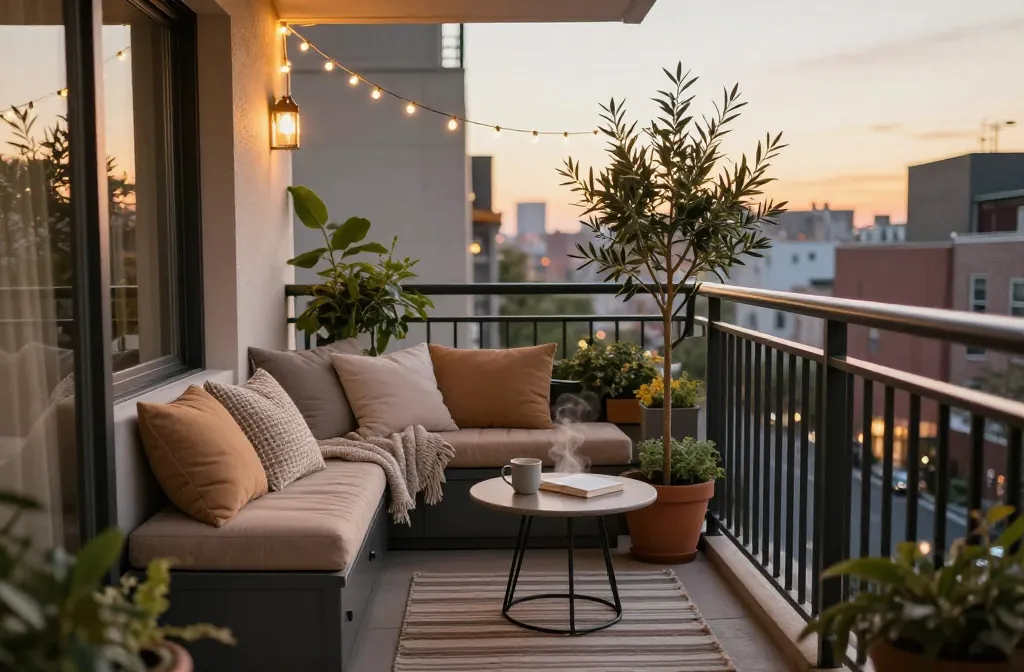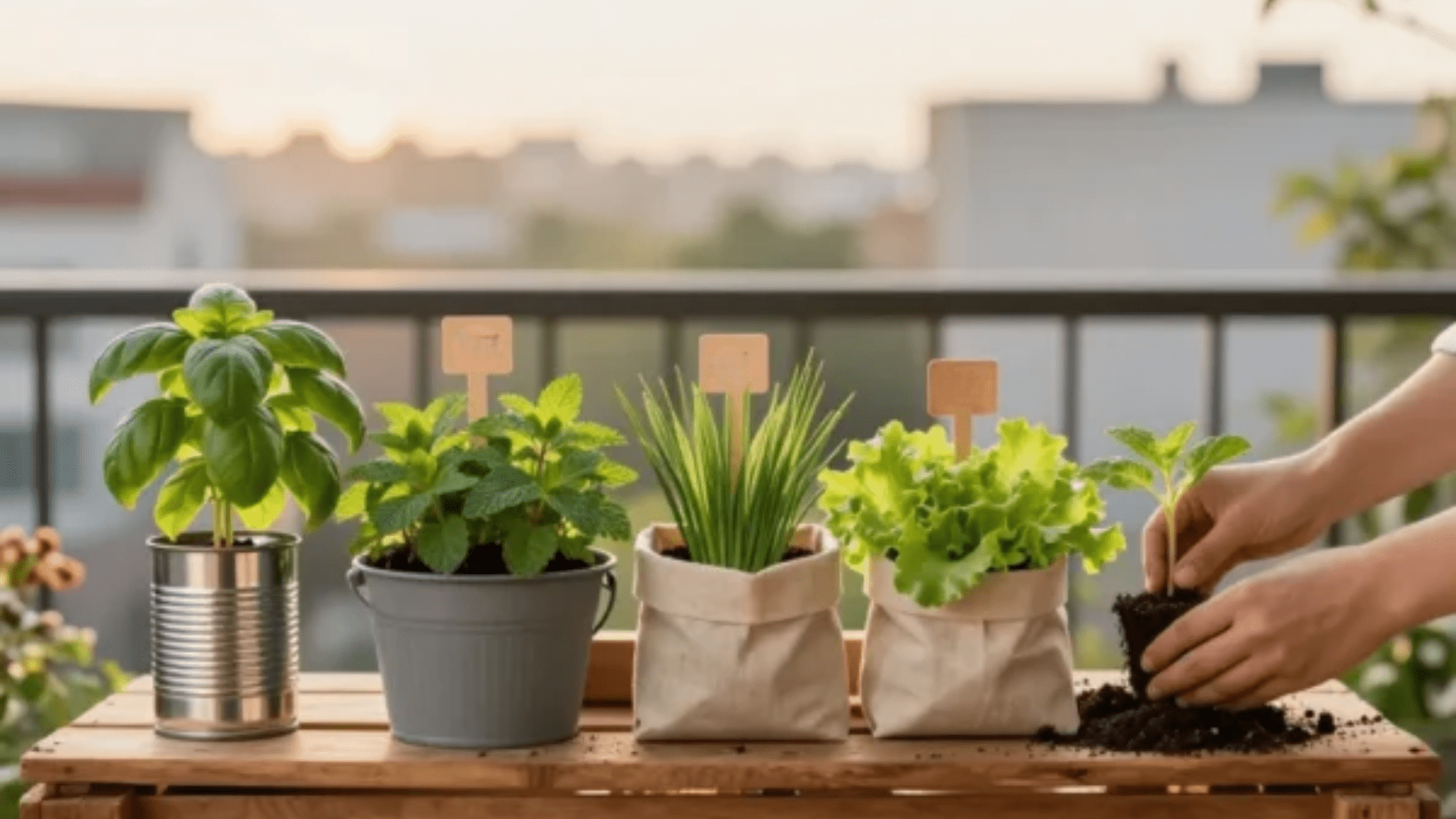

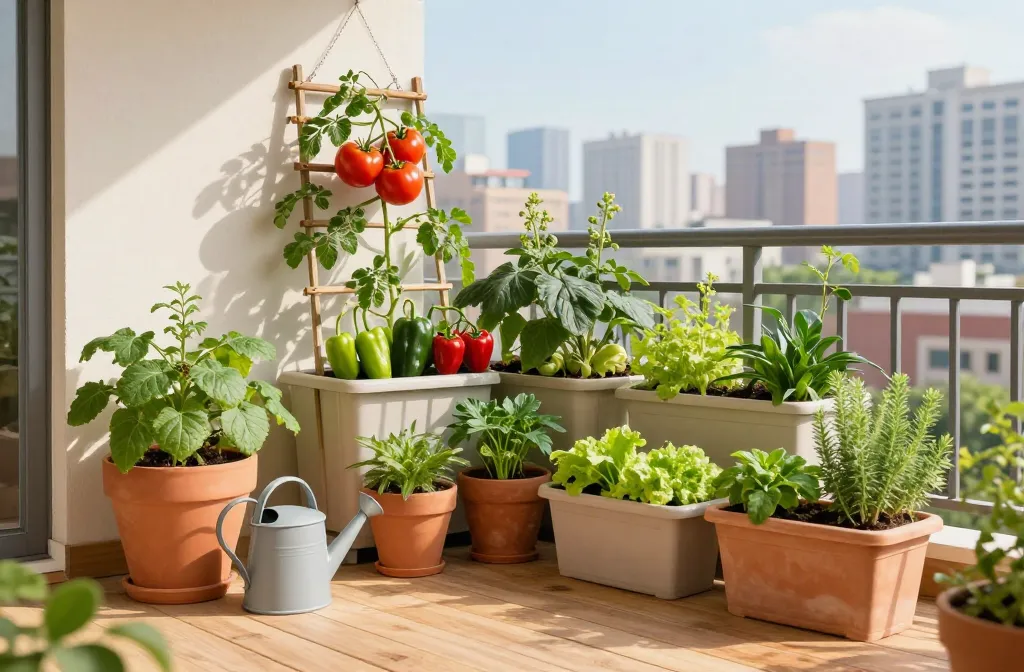

You’ve got a balcony and a dream. Good news: you don’t need a backyard or a degree in botany to grow actual, edible vegetables. You just need sunlight, containers, and a bit of consistency (and maybe a watering can that isn’t a coffee mug). Let’s turn that slice of outdoor space into a mini farm you can brag about every time you make a salad. Here are some tips on how to build an apartment balcony garden
Figure Out Your Sun Situation
You can’t skip this. Sun decides what you can grow and how well it grows. Stand on your balcony and time how many hours of direct sun it gets.
- 6–8 hours (full sun): Tomatoes, peppers, eggplant, cucumbers, beans.
- 4–6 hours (partial sun): Leafy greens, radishes, peas, herbs like parsley and cilantro.
- 2–4 hours (shade-ish): Mint, chives, lettuce blends, spinach. Set expectations accordingly.
FYI, “bright shade” still helps. Light reflects off walls and does more than you’d think. If your balcony faces north and feels like a cave, we can still work with herbs and greens.
Wind and Heat: The Sneaky Enemies
Balconies often act like wind tunnels. Wind dries soil fast and can snap tender stems. Use taller containers as windbreaks, group pots together, or put up a simple mesh screen. Also, concrete radiates heat. In peak summer, water more often and consider light-colored containers so roots don’t cook.
Pick the Right Containers (and Don’t Skimp on Drainage)
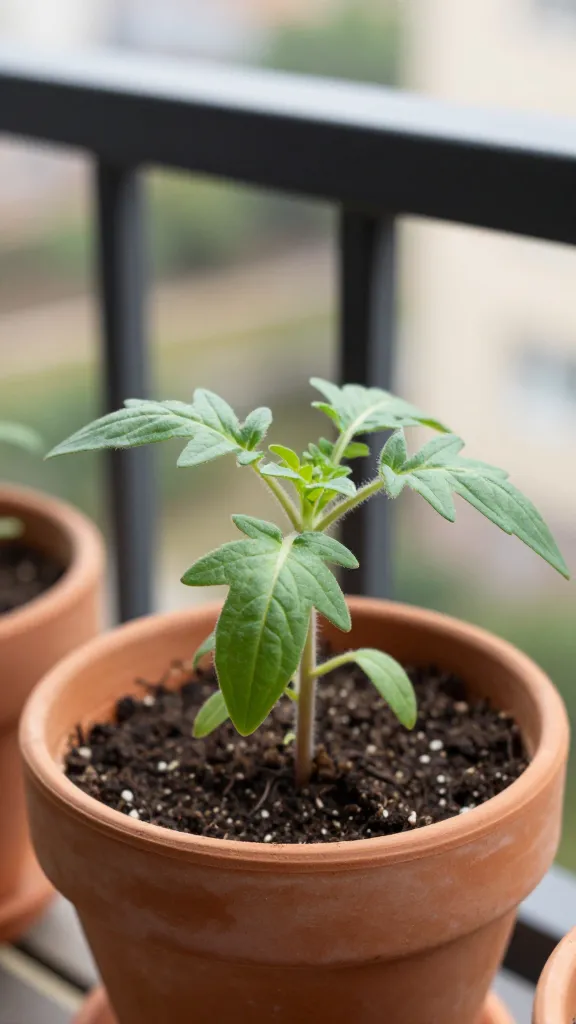
Your container choice decides root health. Roots need space and airflow, not a swamp.
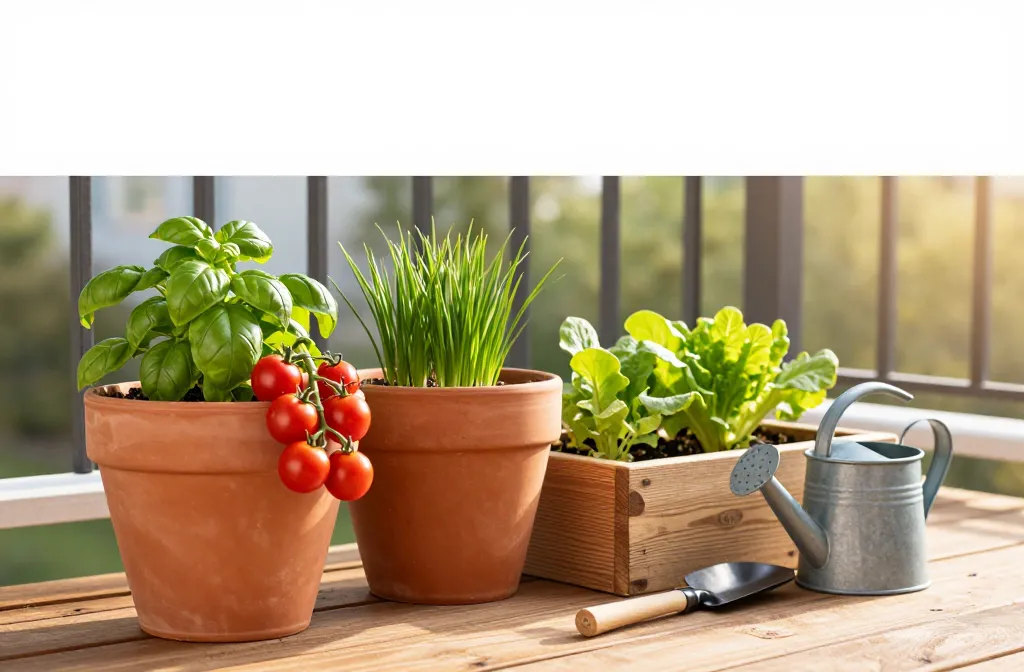
- Size: Bigger pots = happier plants. Tomatoes and peppers like 5–10 gallon containers. Lettuce, herbs, and radishes do great in 6–8 inch pots or window boxes.
- Material: Fabric grow bags drain well and stay cooler. Terra-cotta looks pretty but dries out fast. Plastic works fine and weighs less.
- Drainage: Non-negotiable. At least one hole per pot, ideally more. Add a saucer if your HOA cares about drips.
Vertical and Rail Options
Short on floor space? Go vertical. Use:
- Hanging planters for strawberries and trailing cherry tomatoes
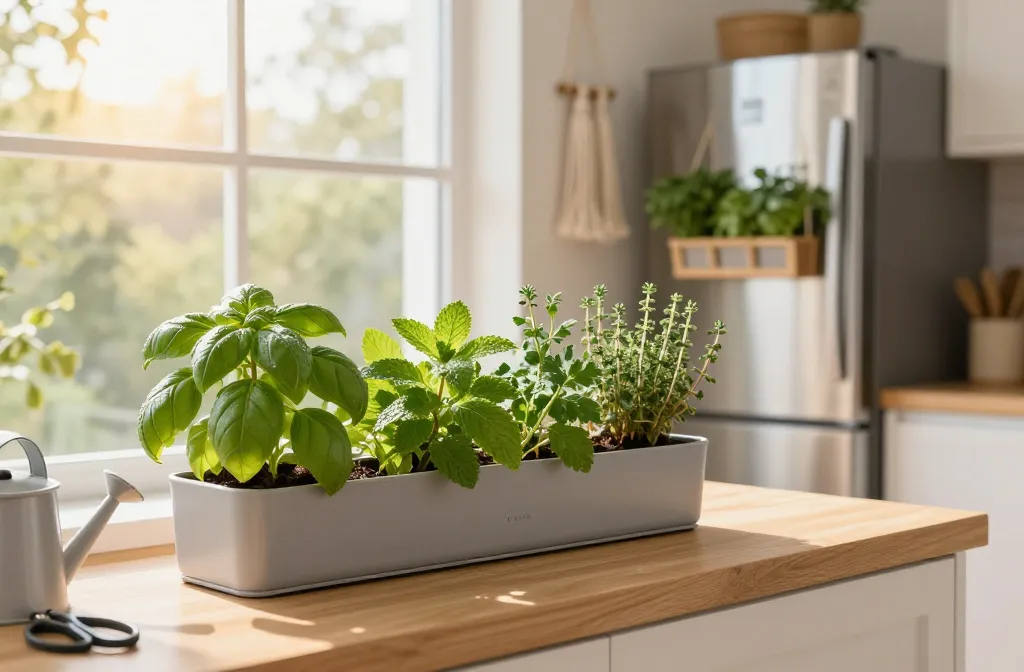
- Rail planters for herbs and lettuce
- Trellises for cucumbers and peas (just secure them well so gravity doesn’t win)
Use Potting Mix, Not “Dirt”
Balcony gardens need lightweight, fluffy media. Garden soil compacts in containers and suffocates roots. Buy a quality potting mix; your plants will thank you with more leaves and fewer drama moments. We love this brand:

Boost with the Right Add-Ins
Want fewer watering emergencies? Mix in:
- Coconut coir for moisture retention (replaces peat, IMO the eco-friendlier move)
- Perlite for drainage
- Compost for nutrients (about 20–30% of your mix)
Start clean to avoid pests—bagged mix beats random “free dirt” every time.
Choose Beginner-Friendly Crops
Start with plants that forgive mistakes. This is not the time to experiment with artichokes.
- Leafy greens: Lettuce, arugula, spinach. Fast, satisfying, and compact.
- Herbs: Basil, parsley, cilantro, chives, mint (mint in its own pot, trust me—it’s a colonizer).
- Fruit veggies: Cherry tomatoes, bush cucumbers, dwarf peppers. Look for labels like “patio,” “container,” or “bush.”
- Quick wins: Radishes (25–30 days), green onions (cut and come again).
Seeds vs. Seedlings
- Seeds: Cheap and fun for greens, radishes, peas.
- Seedlings: Worth it for tomatoes, peppers, and eggplant. They need a head start.
Water, Feed, Repeat (But Do It Smart)
Plants in containers need consistent care. Not clingy, just regular.
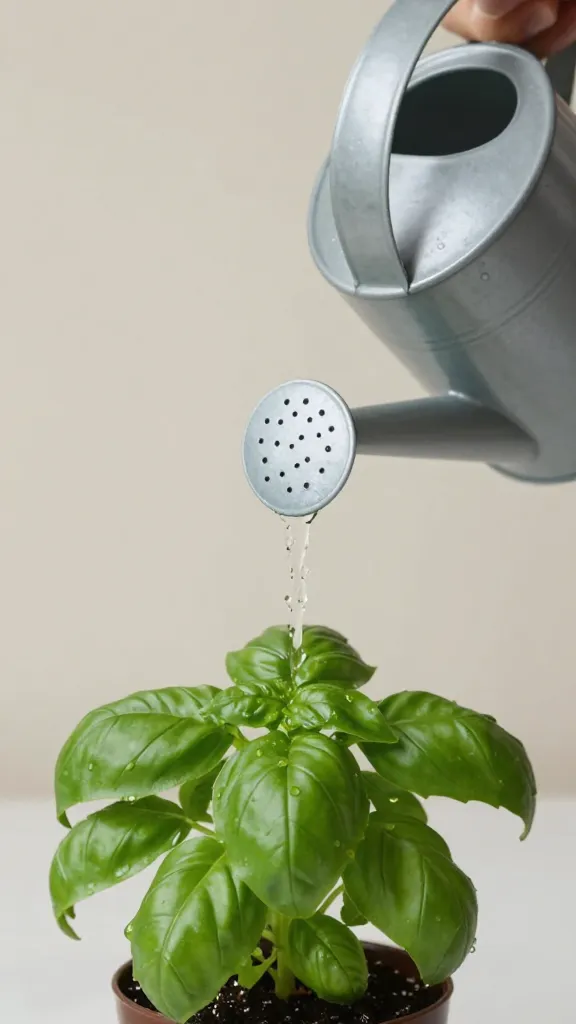
- Watering: Stick a finger in the soil. If the top inch feels dry, water thoroughly until it drains out. Morning watering wins.
- Fertilizing: Container soil runs out of nutrients. Use a balanced liquid fertilizer every 1–2 weeks, or mix in slow-release granules when you plant.
- Mulch: A thin layer of straw or shredded leaves helps keep moisture in and soil cool.
Set Up a Simple Routine
Make it easy so you actually do it:
- Quick morning check: wilted leaves? dry top inch? water.
- Weekly five-minute grooming: trim yellow leaves, tie vines, harvest herbs.
- Biweekly feed: liquid fertilizer day—add it to your calendar, FYI.
Planting Basics (No Overthinking Required)
Planting feels intimidating, but you got this. Follow the tag or seed packet, because depth and spacing matter in small spaces.
- Depth: Most seeds want 2–3x their size in depth. Tomatoes break the rule: bury stems deep to encourage more roots.
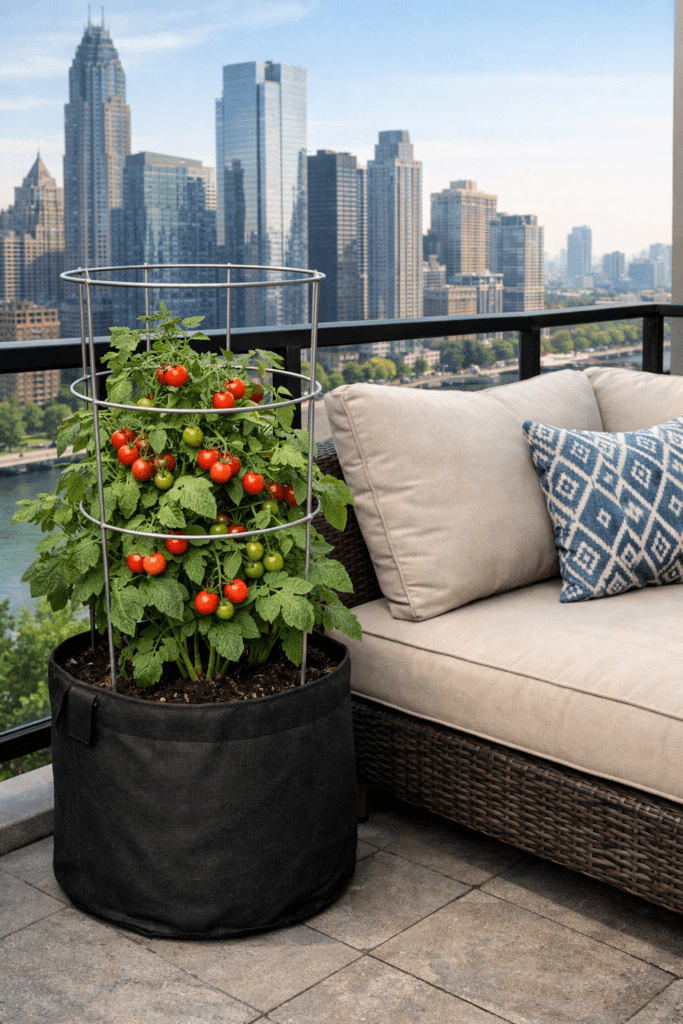
- Spacing: Don’t crowd. One cherry tomato per large pot. Lettuce can handle 4–6 plants in a window box.
- Trellising: Add stakes or a small trellis at planting time for cukes/peas so you don’t stab roots later.
Companion Planting (The Nice-to-Have)
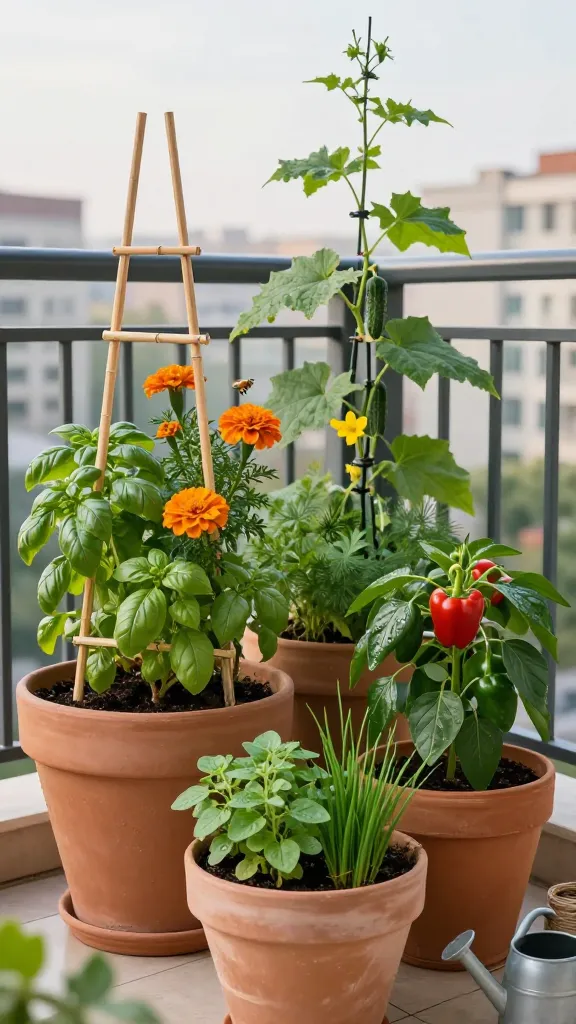
It’s not magic, but it helps:
- Basil with tomatoes for flavor and pest deterrence
- Marigolds near peppers to distract nemesis bugs
- Lettuce under taller plants for shade in summer
Don’t force it. If space feels tight, skip the companions and keep it simple.
Deal with Pests and Problems Without Losing Your Chill
Yes, even balconies have bugs. But you can handle them without going full pesticide warrior.
- Aphids: Blast with water, then spray with soapy water (a few drops of dish soap in a spray bottle). Repeat weekly.
- Fungus gnats: Let the top inch dry between waterings and add a thin layer of sand on top. Sticky traps help. Read more about how to control these here.
- White powder on leaves? Likely powdery mildew. Improve airflow, avoid overhead watering, remove the worst leaves.
- Yellow leaves: Could be overwatering or lack of nitrogen. Check soil moisture first, then feed.
Critter-Proofing
Birds and squirrels think your balcony is a buffet. Drape bird netting or use a simple DIY frame with mesh. Clothespins and a cheap laundry rack? Works surprisingly well, IMO.
Harvest Early, Harvest Often
You encourage more growth by picking regularly. Snip outer lettuce leaves, cut basil above a leaf pair, and grab cherry tomatoes as soon as they blush red (or yellow, depending on variety). Overripe fruit screams “hey bugs, party here,” so stay on it.
Regrow and Stretch Your Harvest
Regrow green onions from the white roots in a glass, then pot them. Stagger your sowing of lettuce every 2–3 weeks so you always have fresh leaves instead of a glut followed by famine.
FAQ
How often should I water balcony plants?
Check daily in hot weather. Water when the top inch feels dry. In heat waves, you may water once in the morning and again lightly in late afternoon. If leaves droop in the evening but perk up by morning, you’re fine; if they droop in the morning, water now.
Can I grow tomatoes on a shady balcony?
Tomatoes want 6–8 hours of sun. With 4–5 hours, choose dwarf or patio varieties and manage expectations. You’ll get fewer fruits, but still delicious ones. If you get less than 4 hours, pick leafy greens and herbs instead.
What’s the best fertilizer for containers?
Use a balanced liquid fertilizer (like 4-4-4 or 10-10-10) every 1–2 weeks during active growth. For low-maintenance, mix a slow-release organic fertilizer into the potting mix at planting, then top up mid-season.
Why do my plants keep drying out?
Likely small pots, hot surfaces, and wind. Move plants out of harsh afternoon sun if possible, upgrade to larger containers, mulch the soil surface, and group pots to create a microclimate. Fabric grow bags help roots breathe and handle heat better.
Is tap water okay for my plants?
Usually yes. If your tap water runs very hard or chlorinated, fill a watering can and let it sit overnight to off-gas chlorine. Rainwater is great if you can collect it safely, but don’t overcomplicate it—tap works for most people.
Do I need to hand-pollinate?
For tomatoes and peppers, a gentle shake of the plant during bloom helps. Cucumbers grown on a balcony often benefit from a quick hand-pollination with a small brush if you notice flowers but no fruit. Not mandatory, but it can boost yield.
Conclusion
A balcony garden doesn’t need perfection—just sun awareness, the right containers, solid potting mix, and a simple routine. Start with easy crops, water and feed on schedule, and harvest often. Before long, you’ll step outside, snip dinner, and wonder why you waited so long. Bonus: bragging rights taste almost as good as homegrown basil.