

African violets are such a pretty little flower, but like any flower or plant, taking proper care of them is crucial for success. That includes proper watering. African violets require consistent moisture without becoming waterlogged, making watering a challenge for many growers. One such method to overcome this is self-watering containers. Using self-watering containers for african violets can provide a practical solution by maintaining steady soil moisture while reducing the risk of root rot. This article aims to focus on how to care for these delicate flowers and some great options when it comes to self-watering containers.
Unique Watering Needs of African Violets
While african violets need evenly moist soil at all times they can be sensitive to both drying out and excessive moisture. Their roots are delicate and prone to root rot if left in soggy soil. At the same time, allowing the soil to become too dry causes stress and inhibits blooming.
Because they absorb water primarily through the soil, maintaining consistent soil moisture is critical. African violets also dislike water on their leaves, making bottom watering a preferred method. Self-watering containers provide a controlled moisture environment by supplying water from below, meeting these specific watering needs efficiently. To be honest, this is my preferred method overall, as water on leaves in general can lead to potential disease or fungus issues.
Self-watering pots help overcome these challenges by creating an environment where moisture is consistently available, but the mix retains enough air space to prevent waterlogging. Using a well-draining mix with added perlite further reduces the risk of root rot. This system minimizes the guesswork, reducing the risk of mistakes often made with manual watering.
Bottom Watering Versus Traditional Pots
In traditional pots, watering from the top can lead to uneven soil moisture and wet leaves, which as mentioned above, may cause fungal issues. Bottom watering, used in self-watering containers, feeds water through the porous inner pot or via a wick into the soil.
This method keeps the soil uniformly moist and prevents water from sitting on leaves. The lower reservoir maintains a steady water supply, ensuring the roots can draw moisture as needed without saturation. Compared to traditional pots, self-watering containers offer better control over soil moisture, promoting healthier root growth and more reliable blooming.
How Self-Watering Containers Work

Self-watering containers rely on well-designed structures and natural moisture movement to provide African violets with steady hydration. This system prevents overwatering by controlling water delivery from below the soil, ensuring the roots receive consistent moisture without wetting the leaves.
Pot-in-Pot and Double-Layer Designs
Many self-watering containers use a pot-in-pot or double-layer design. The inner pot holds the African violet and soil, while the outer reservoir stores water separately. This layout prevents water from saturating the soil surface, reducing the risk of crown rot.
The inner pot is often absorbent or contains a wick system that connects to the water reservoir. This design allows moisture to be drawn upward slowly while keeping the plant’s leaves dry. The separation of water from soil also simplifies monitoring water levels, as the outer reservoir is visible or easily accessible for refilling.
Role of Water Reservoir and Capillary Action
The core feature is the integrated water reservoir in the outer container. It holds a reserve of water that feeds the plant gradually. A wick, or sometimes the porous material of the inner pot itself, uses capillary action to pull water from the reservoir into the soil.
Capillary action mimics natural moisture absorption by plant roots. It supplies water only as the soil dries slightly, preventing saturation. This method supports healthier root development by maintaining optimal moisture and avoiding constant wetness, which can cause root rot or fungal issues.
Moisture Regulation and Consistent Hydration
Self-watering systems offer precise moisture regulation, keeping soil evenly damp without frequent top watering. This consistent moisture is critical for African violets, which require stable conditions to bloom well.
Because the container releases water slowly, the plant takes up only what it needs. This reduces the risk of overwatering and allows the soil to remain light and aerated. It also extends the time between waterings, often lasting 1-3 weeks depending on conditions, making care easier for growers who may forget or travel.
Key Features of the Best Self-Watering Pots for African Violets
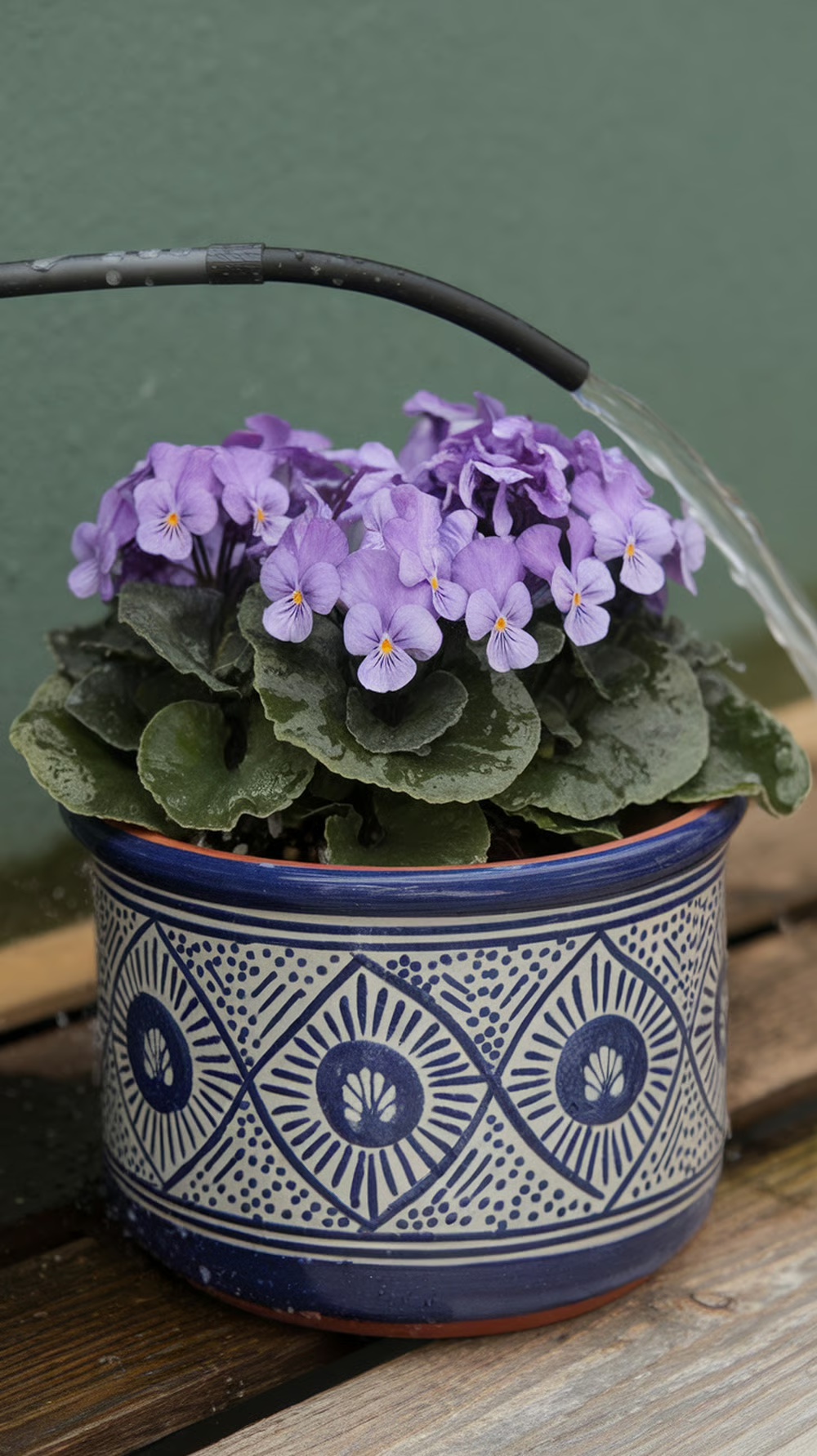
High-quality self-watering pots balance moisture control, root health, and ease of use for African violets. Their design involves materials that regulate water absorption, appropriate pot sizes to support root growth, clear indicators to monitor hydration, and features promoting adequate oxygen circulation.
1) Material Selection: Ceramic, Dolomite Clay, and Plastics
The choice of material greatly affects how moisture interacts with the soil and roots. Ceramic pots are popular for their weight and aesthetic appeal, often incorporating glazed outer surfaces and unglazed inner pots. The unglazed inner section allows slow water absorption, preventing soggy soil.
Dolomite clay is a specific type of ceramic favored for its porous properties. It helps regulate moisture by steadily releasing water to the roots and supporting healthy oxygen flow.
Plastic pots are lighter and durable but often rely on added features like absorbent cotton ropes to deliver water from the reservoir. While plastics lack natural breathability, some designs incorporate micro-pores or separate water compartments to mitigate this limitation.
2) Ideal Pot Size and Root Space
African violets thrive in pots between 4 to 6 inches in diameter. This size provides enough room for root expansion without overwhelming the soil volume, which could retain excessive moisture. A pot too large risks waterlogging; too small restricts root growth, causing stunted plants. Depth is equally important to prevent root crowding while allowing ample soil to hold consistent moisture.
3) Water Level Indicator and Monitoring
A visible water level indicator is a key feature for convenient and precise moisture management. It allows growers to see when the reservoir needs refilling without disturbing the plant.
This reduces the risk of dry spells or overfilling, both of which can damage African violet roots. Clear indicators help maintain steady soil moisture, a critical factor since these plants are sensitive to fluctuating water levels.
Some planters include color-coded markers or transparent tubes integrated into the pot design to facilitate quick visual checks.
Popular Models and Alternatives for African Violet Self-Watering Pots
Self-watering pots have become a preferred choice among indoor gardeners who want a balance of moisture control and convenience. There are different models that vary in materials, design features, and ease of maintenance, providing options for specific needs. Here is a list that we like.
1) Litudiso African Violet Pot

The Litudiso African Violet Pot stands out for its handcrafted quality and aesthetic appeal. It features different unique ceramic glazes on the outer pot, making it visually distinctive. The inner pot, made from natural kaolin, excels in moisture retention, allowing the plant’s roots to draw water at a consistent rate.
This self-watering system reduces the risk of overwatering by slowly transferring water from the reservoir to the soil. It requires less frequent watering compared to standard pots. The design also supports proper air circulation around roots, which is vital for healthy growth of African violets. The Litudiso pot’s size and form suit indoor setups such as shelves or windowsills.
2) Dphagesy Pot

Dphagesy uses a pot-in-pot system that isolates water from leaves, reducing dark leaf spots.
3) BuyMax Clay Pot
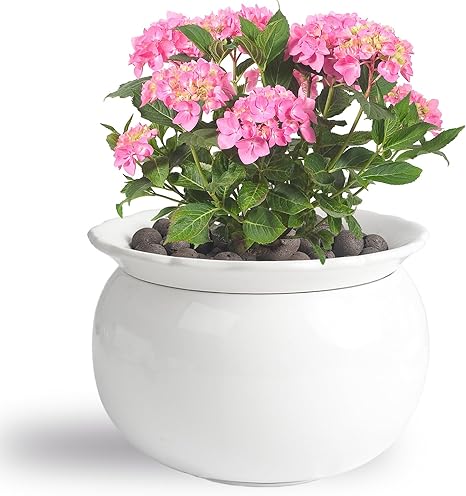
BUYMAX offers dolomite clay pots with glazed exteriors and water level indicators, helping manage watering frequency visually.
Comparison to Traditional Pots
Traditional pots rely on manual watering and drainage holes to manage moisture, requiring frequent attention. They lack moisture reservoirs, which can lead to inconsistent soil dampness and higher risk of root damage. In contrast, self-watering pots use a water reservoir and absorbent inner pots to supply a controlled amount of moisture.
This design reduces the chances of overwatering or underwatering. It also protects leaves from direct contact with water, preventing spotting common in African violets. While traditional pots may be less expensive, they demand more skill and vigilance. Self-watering pots streamline maintenance, making them ideal for less experienced indoor gardeners or those with limited time.
Troubleshooting and 5 Tips for Long-Term Success
Maintaining healthy African violets in self-watering containers requires attention to watering balance, soil condition, and seasonal adjustments. Effective management reduces risks like overwatering, root rot, and salt buildup while optimizing the pot’s water storage and design features.
Common Mistakes and How to Avoid Them
- Don’t overwater, this can cause root rot when soil stays saturated too long. Self-watering pots help regulate moisture but users must ensure the reservoir isn’t kept constantly full. Allow the wick system to respond to the plant’s actual water needs instead of habitually topping off the reservoir.
- Underwatering can also occur if the wick dries out or becomes clogged. Regular inspection of the wick material—usually nylon or felt—is necessary to ensure proper water flow. Using the right pot design with adequate drainage holes prevents waterlogging and enables root aeration.
- Keeping water away from leaves is essential; wet foliage often leads to crown rot. Bottom watering through self-watering containers minimizes this risk by delivering moisture directly to the roots, mimicking the African violet’s natural preference.
- Salt Buildup and Soil Flushing: mineral salts from fertilizers and tap water can accumulate in the soil and on the pot surface, especially in self-watering systems where water recirculates. This buildup can stress roots and inhibit nutrient uptake.
- Periodic flushing of the soil with distilled water flushes excess salts. To do this, remove the plant from its pot and gently rinse the root ball with clean water. Repotting every 6 to 12 months with fresh, well-draining African violet mix can prevent salt accumulation.
Frequently Asked Questions
Self-watering containers provide consistent moisture to African violets and reduce watering errors. Selecting the right pot and soil mix is critical to avoid root rot and ensure healthy growth.
How do self-watering containers benefit African violets?
They maintain steady soil moisture by drawing water from a reservoir, preventing both drying out and overwatering. This consistency helps African violets thrive by reducing stress from fluctuating moisture levels.
What are the potential downsides to using self-watering pots for these plants?
If the potting mix is too dense or lacks proper aeration, roots can rot due to excessive moisture. Failure to pre-moisten the soil or monitor water levels can impair the system’s function and harm the plant.
Which features should I look for in the best self-watering pots for African violets?
Porous, unglazed ceramic pots are preferred as they absorb water from the reservoir efficiently. A two-part system with an upper pot and a water reservoir below is ideal. Avoid pots with drainage holes in the upper section to maintain proper water delivery.
Can large African violets thrive in self-watering containers, and if so, what size is recommended?
Yes, larger African violets do well in self-watering pots. It is recommended to choose a pot slightly larger than the current one, such as a 5-inch diameter pot for a plant previously in a 4-inch pot, to provide adequate root space without excess soil.
Where can I find quality self-watering containers for African violets?
Ceramic self-watering pots are available at garden centers and online retailers. Brands like Border Concepts, Inc. offer suitable options specifically designed for African violets.
How do I properly set up and use a self-watering container for an African violet?
First, prepare a well-aerated potting mix, typically a 50/50 blend of African violet soil and perlite. Pre-moisten the soil thoroughly before potting the plant. Place the plant in the upper pot and fill the lower reservoir with water, ensuring the inner pot’s base remains in contact with the water for continuous hydration. Check water levels regularly and refresh the soil annually.
Affiliate Disclosure:
Some of the links in this post may be affiliate links. This means that if you click on a link and make a purchase, I may earn a small commission at no extra cost to you. I only recommend products and services I genuinely believe in. Thank you for supporting this blog!