
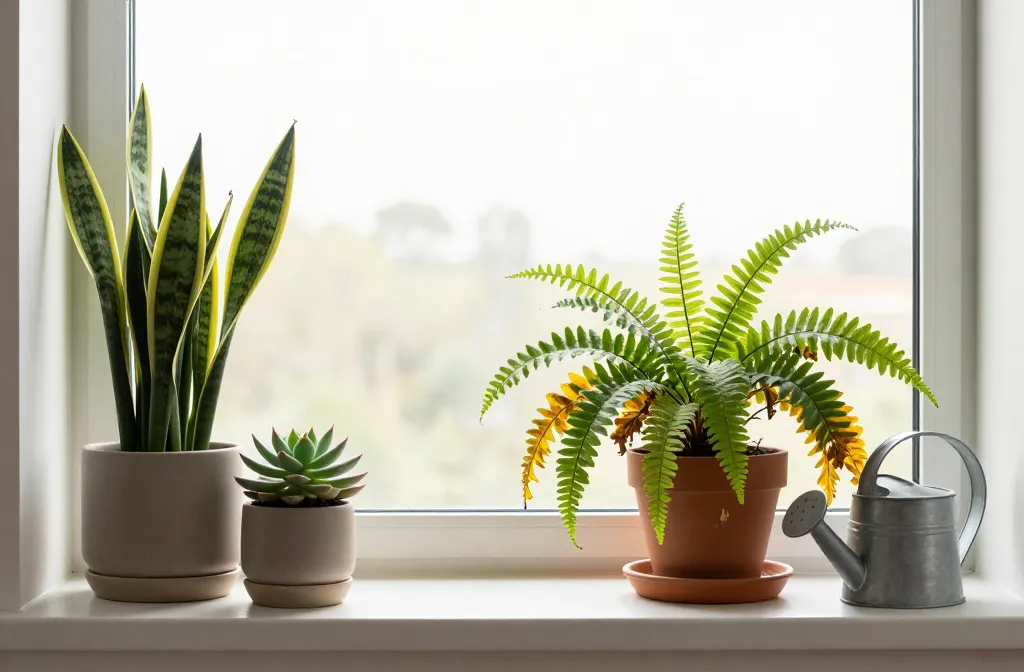

You bring a new plant home, name it something adorable, and give it your whole heart. Two weeks later, it’s melting into the pot like a sad salad. What happened? Houseplants aren’t fragile, but they do have opinions, and they’re not shy about voicing them with ugly crispy leaves. Let’s talk about the common mistakes beginners make so your plant fam can thrive, not just survive.
Watering Like You’re Filling a Bathtub
You can love a plant to death, literally by overwatering. Most beginners assume leaves drooping = thirsty, but drooping can mean too much water as well. Roots need oxygen, and soggy soil suffocates them.
How to water smarter
- Check the soil first. Stick a finger in up to the second knuckle. If it feels dry there, water. If not, step away from the watering can.
- Water deeply until it drains from the bottom, then let the plant dry out according to its needs.
- Use pots with drainage holes. No holes = root swamp. Hard pass. Trust me, I made this mistake once with 5 gallon buckets outside and boy did that stink.
Plants that hate overwatering
- Snake plants, ZZ plants, cacti, succulents – all prefer drying out between drinks.
- Calatheas, ferns – like consistent moisture, but not waterlogged soil.
Putting Plants Where You Wish Sunlight Existed
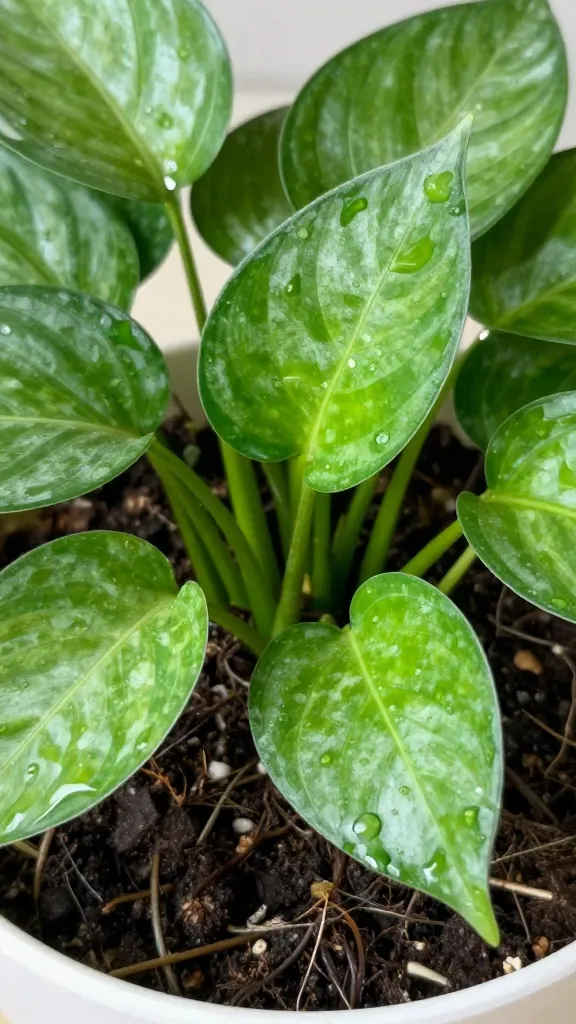
Plants eat light. If you place a plant in a dark corner because it “looks cute,” it will dramatically fade out like a soap opera character. Match the plant to the light you actually have, not the light you want.
Related: Check Out Plants That Thrive In Low Indoor Light
Understanding light the easy way
- Bright, indirect: Near a window with sheer curtains or a spot a few feet back from a sunny window. Great for monsteras, pothos, and peperomias.
- Low light: You can read a book without turning on a lamp, but it’s not sunny. Good for snake plants and ZZ plants. FYI, “low light” doesn’t mean “no light.”
- Direct sun: Sunbeams smack the leaves for hours. Perfect for cacti and many succulents.
Quick hacks
- Use a light meter app or just your shadow: crisp shadow = bright light; fuzzy shadow = medium; barely there = low.
- Rotate plants every couple of weeks so they don’t lean like they’re whispering secrets to the window.
Potting Soil That’s Basically a Brick
Soil matters a lot. The bag that says “potting mix” works for many plants, but some need tweaks. Dense, compacted soil traps water and suffocates roots.
Easy mix upgrades
- Aroids (monstera, pothos, philodendron): Potting mix + perlite + orchid bark (roughly 2:1:1).
- Succulents/cacti: Cactus mix + extra perlite or pumice (1:1 for faster drainage).
- Ferns and calatheas: Potting mix + coco coir + perlite (2:1:1) for moisture without sogginess.
Repotting timing 101
- Repot when roots circle the bottom or pop out the drainage holes.
- Go up just one pot size. Jumping from a studio apartment to a mansion leaves soil wet for too long.
Forgetting Humidity Exists
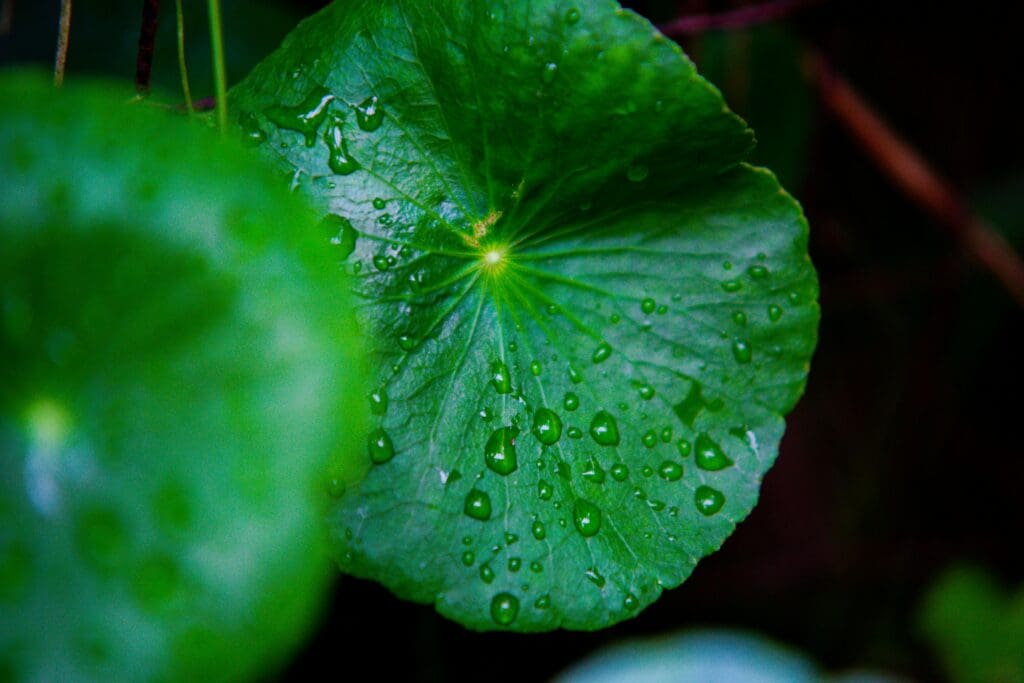
Many popular houseplants evolved in jungles. Our heated homes feel like deserts to them. Brown crispy edges on leaves usually scream “more humidity please.”
Simple humidity boosts
- Group plants together. They create a tiny microclimate.
- Use a pebble tray with water under the pot (not touching the bottom) to increase local humidity.
- Run a small humidifier nearby. IMO this solves 80% of drama with calatheas.
Ignoring Pests Until They Throw a House Party
Spider mites, mealybugs, fungus gnats, they all love a cozy indoor vibe. Catch them early and you’ll save yourself a headache.
Spotting trouble fast
- Spider mites: Tiny dots and fine webbing. Leaves look speckled like they have freckles.
- Mealybugs: White cottony clumps in leaf nooks. They look like lint but worse.
- Fungus gnats: Little flies hovering above damp soil. They adore overwatered pots. Here is an article on how to manage these.
Treatment basics
- Isolate the plant. No one needs a pest parade.
- Wipe leaves with soapy water or a diluted neem solution. Repeat weekly for a few rounds.
- Let soil dry more between waterings. For gnats, add sticky traps and consider a layer of sand or mosquito bits.
Feeding and Pruning: Either Ghosting or Overdoing It
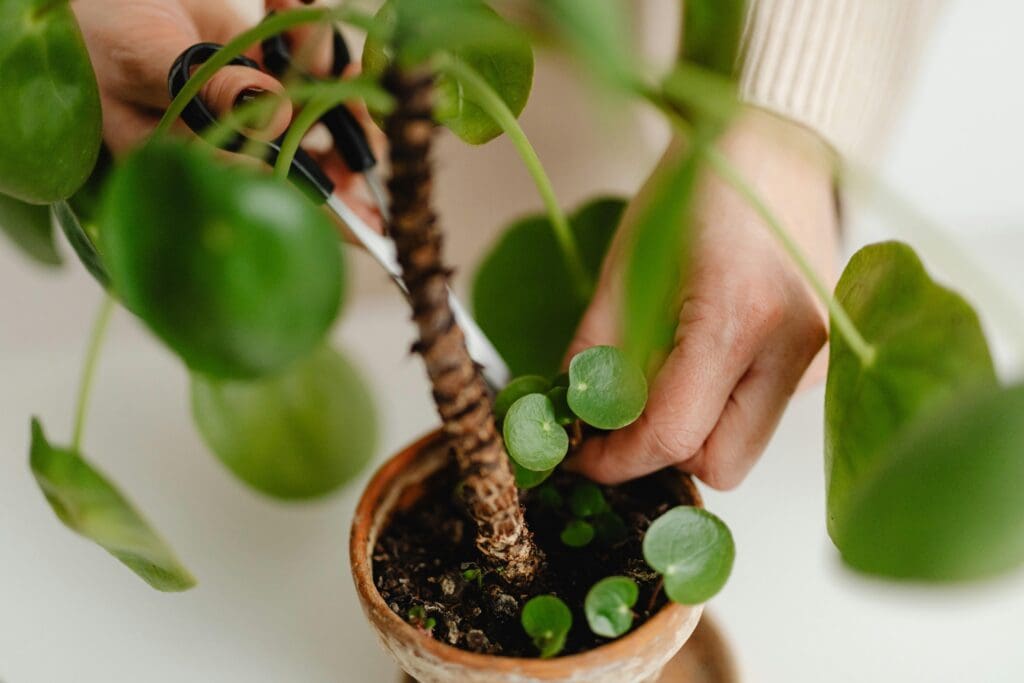
Plants don’t need a gourmet diet every day, but they do appreciate consistent feeding during active growth. On the flip side, blasting them with fertilizer creates crispy tips and salty soil. Moderation wins.
Fertilizer made simple
- Use a balanced, diluted liquid fertilizer (half-strength) every 4–6 weeks during spring and summer.
- Skip feeding in winter unless your plant grows under strong lights.
- Flush the soil with plain water every few months to wash out salt buildup.
Pruning without fear
- Snip leggy vines above a node to encourage branching.
- Remove yellow, dead, or crispy leaves. They won’t recover. It’s not you—it’s them.
- Propagate cuttings in water or damp perlite. Free plants? Yes please.
Buying First, Learning Later
Impulse plant shopping feels amazing… until you realize you bought a humidity-loving diva for your dark, drafty hallway. Do a 60-second check before you buy.
The pre-purchase checklist
- Where will it live? Be honest about your light.
- How often can you water? Weekly? Every two weeks? Choose accordingly.
- Pets or kids around? Avoid toxic plants if curious mouths exist.
- Check for pests in-store: under leaves, stems, and soil surface.
Setting Up a Care Routine That Doesn’t Feel Like Chores
Your plants don’t need you 24/7. They just need consistency. A simple routine helps you catch small issues before they turn into leaf drama.
Weekly 10-minute plant check
- Water the ones that need it, skip the rest. FYI, schedules lie; soil checks don’t.
- Wipe dusty leaves. Dust blocks light and makes them look tired.
- Rotate pots and check for pests.
- Note any new growth or yellowing—patterns tell you what to fix.
FAQ
How do I know if I’m overwatering or underwatering?
Overwatered plants often have yellowing leaves, mushy stems, and wet soil that smells funky. Underwatered plants feel light, have dry, crispy leaves, and the soil pulls away from the pot edges. Check the root ball if you’re unsure: brown, mushy roots mean too much water; dry, brittle roots mean too little.
Do I need a grow light?
If your windows don’t offer bright, indirect light for at least a few hours a day, a grow light helps a lot. Aim for a full-spectrum LED, 12–14 inches above your plant, on a timer for 10–12 hours. It’s not cheating; it’s called giving your plant lunch.
What’s the easiest plant for beginners?
Snake plant, ZZ plant, pothos, and philodendron heartleaf rarely complain and forgive occasional neglect. They tolerate a range of light and don’t demand constant watering. Start with one of these and you’ll build confidence fast, IMO.
Why are my leaf tips brown?
Common culprits include low humidity, over-fertilizing, or inconsistent watering. Trim the brown tips if they bug you and adjust care: increase humidity, dial back fertilizer, and keep watering consistent. If you use very hard tap water, try filtered water for finicky species.
Can I repot right after bringing a plant home?
You can, but it’s usually better to wait a couple of weeks unless the plant is root-bound or the soil stays swampy. New plants need time to acclimate. Let it settle, observe its watering needs, then repot with a mix that suits the species.
What’s the best watering schedule?
Schedules cause more harm than good. Different plants dry out at different speeds based on pot size, light, and season. Use the finger test, lift the pot to feel the weight, and water only when the plant’s ready.
Conclusion
You don’t need a greenhouse or a botany degree to keep houseplants happy—you just need to avoid the big traps. Match the plant to your light, water with intention, use the right soil, watch humidity, and peek for pests. Do that consistently and your plants will reward you with new leaves, fewer tantrums, and a home that feels alive. And hey, if one doesn’t make it? Learn, laugh a little, and try again. That’s the real plant parent vibe.